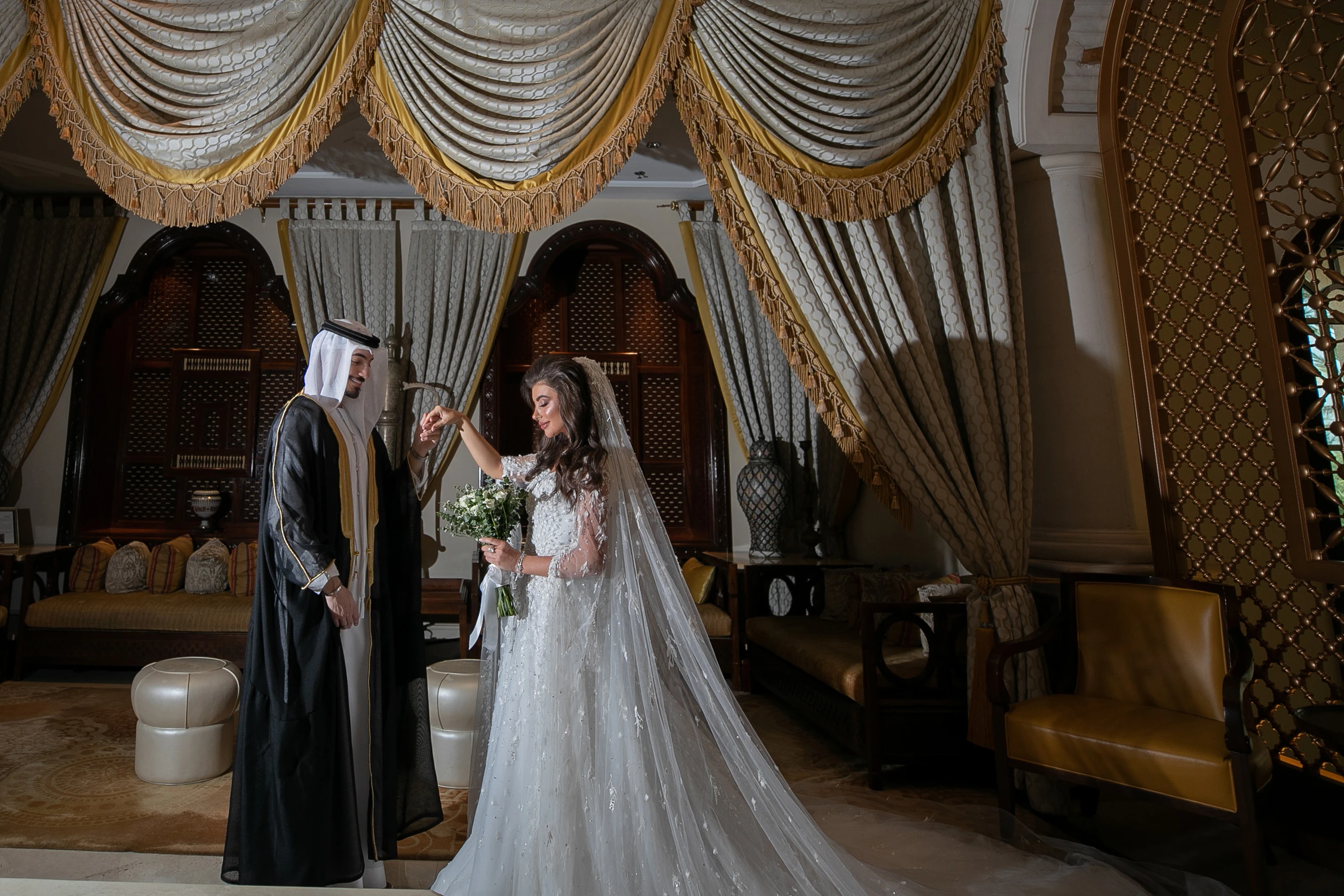
Is an Emirati wedding a single day?
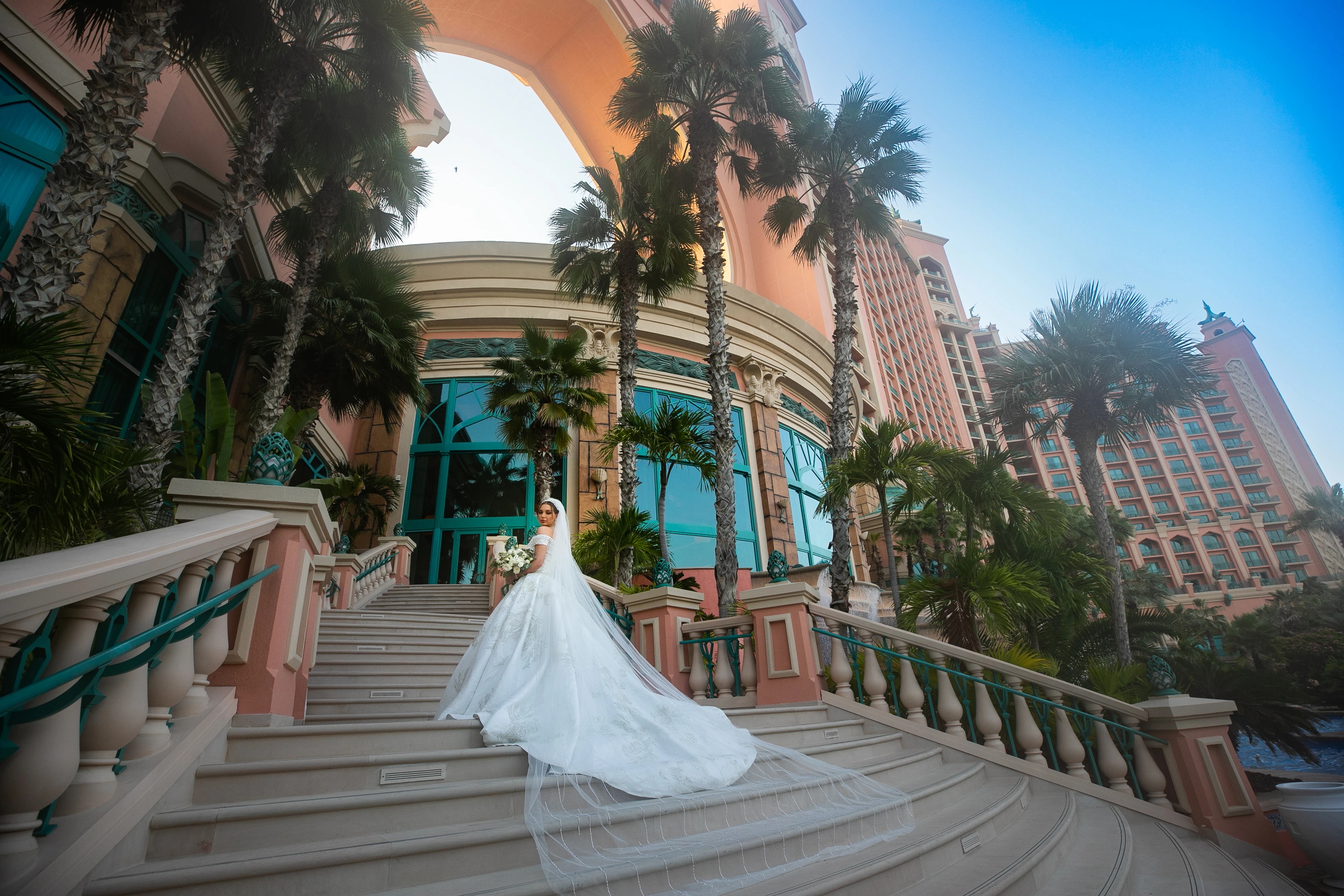
Ask a bride in Dubai or Abu Dhabi when her wedding is and she may give you three dates. A traditional Emirati wedding moves through several stages over weeks or months: the families meet, the marriage contract is signed, the bride's henna night is held, and finally the wedding celebration itself takes place. Every family adapts the details, and city weddings today look different from those of a generation ago, but the shape is remarkably consistent.
Much of what follows is shared with weddings across the Gulf and the wider Arab world, so if you have been to an Arab wedding elsewhere a lot will feel familiar. What makes an Emirati wedding its own is the way these steps are kept: the place of the family, the gold, the music, and the separation of many celebrations into gatherings for men and gatherings for women.
How do the families agree the marriage?
A marriage traditionally begins with the families. The groom's family visits the bride's family to ask for her hand, often with the groom's father or an older male relative speaking for him. If both sides agree, the two families begin talking about the arrangements: the timing, the gifts, and the mahr, the gift the groom gives the bride as part of the marriage. In many families the mahr and the gifts that come with it, often gold, perfume and fabric, are presented to the bride before the wedding and become part of her own story of the day.
What happens at the Milcha?
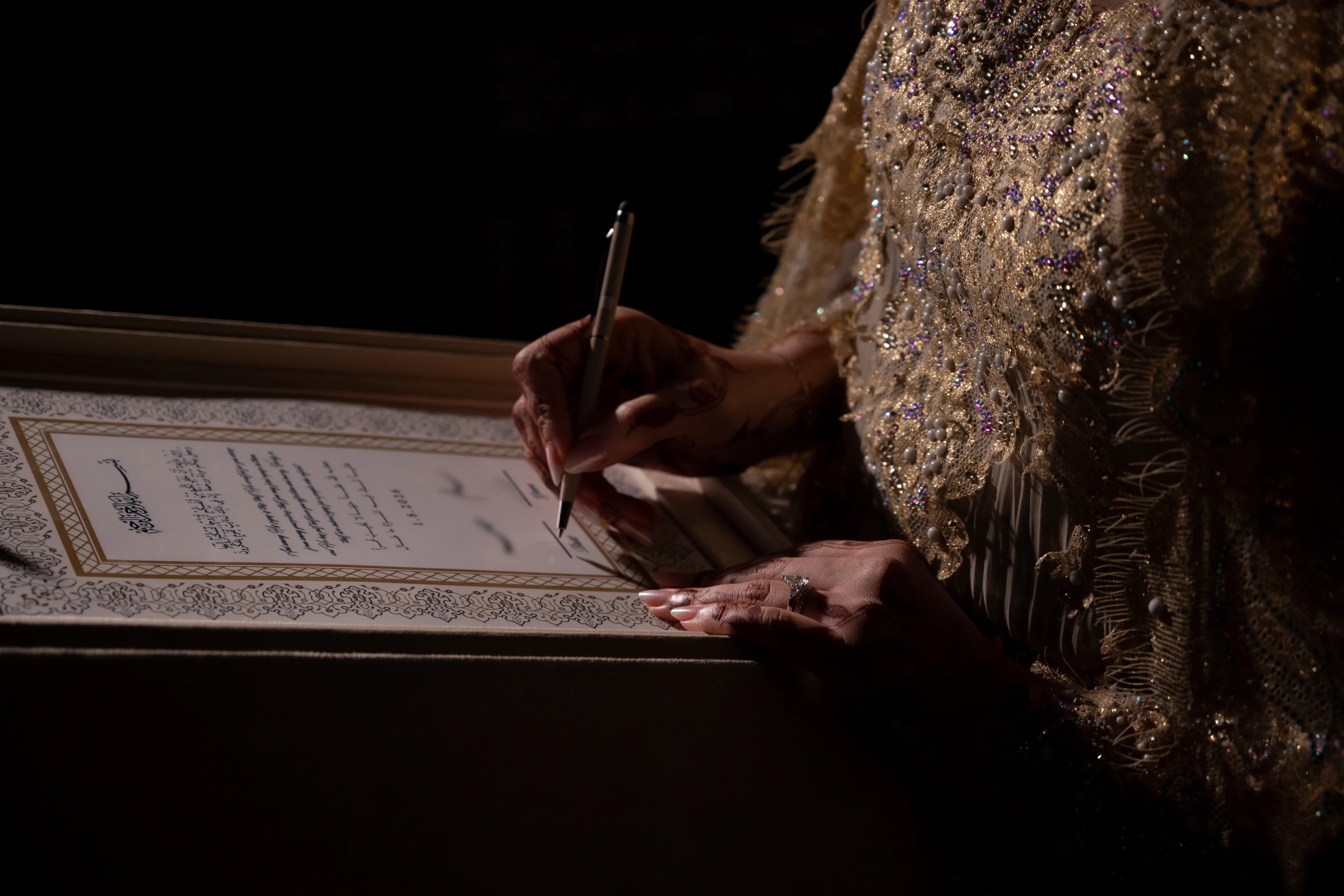
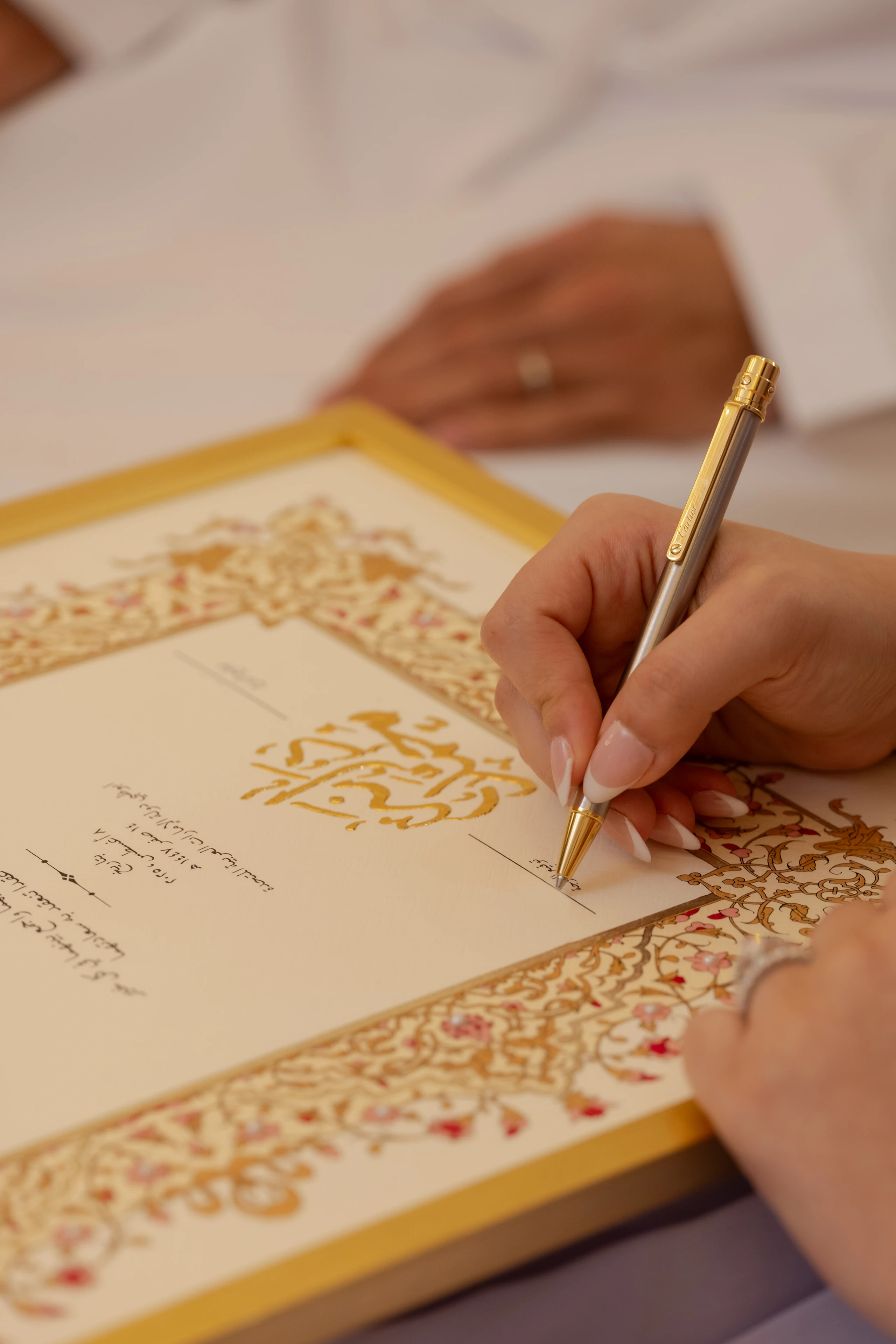
The Milcha (also written malcha or melcha) is the signing of the marriage contract, and in religious and legal terms it is the moment the couple are married. It is usually small and close: the couple, their fathers or guardians, witnesses and an official who registers the marriage. The bride may sign in a separate room from the men and the groom may only join her afterwards. Some families hold the Milcha months before the wedding, others in the same week.
Because it is so intimate, the Milcha is easy to leave unphotographed, and many brides later wish they had not. The signature, the pen, the framed contract and the first quiet moment together are among the most personal photographs of the whole marriage. We cover it as its own service on our Milcha photography page.
What happens at the henna night?
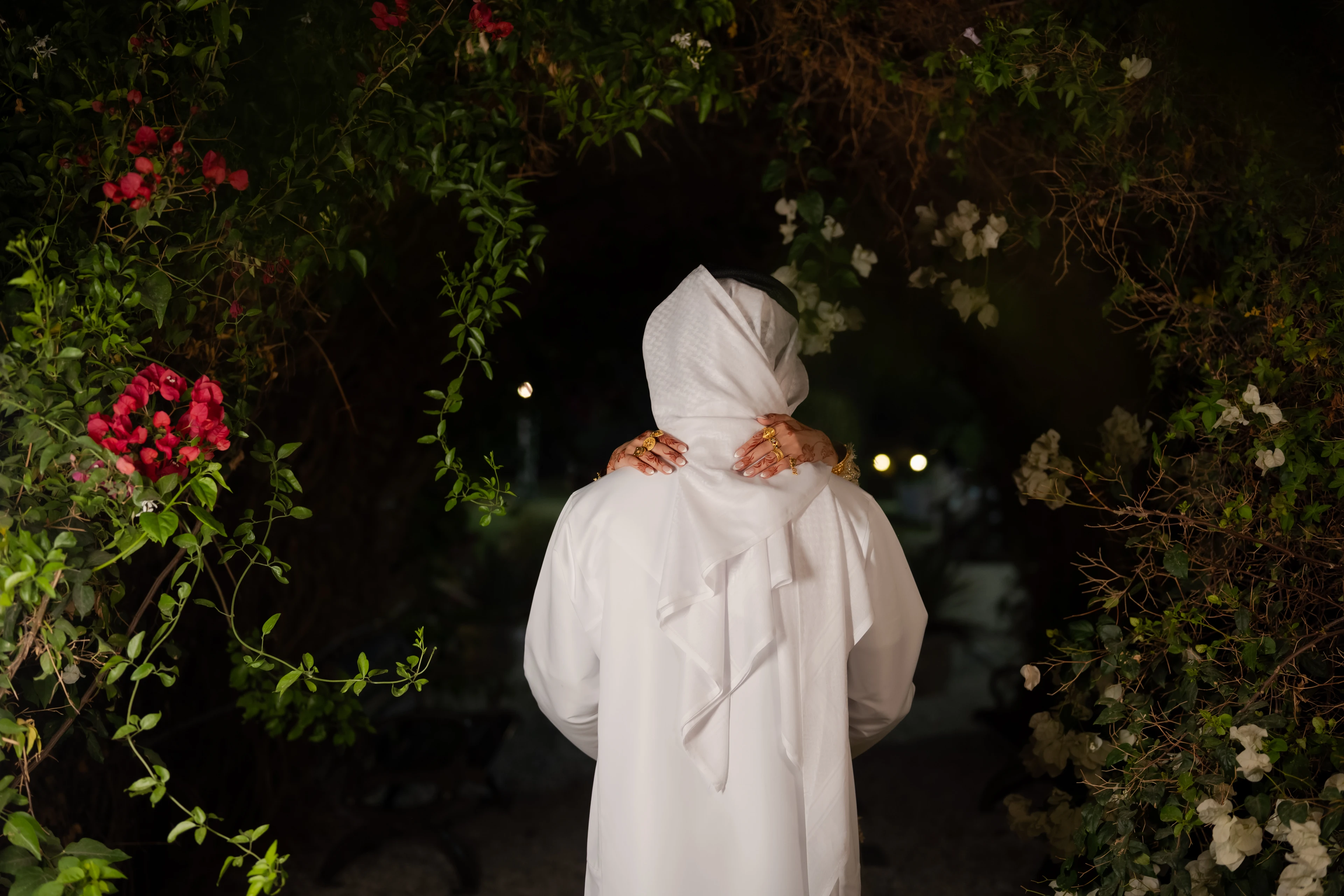
In the days before the wedding comes laylat al-henna, the henna night. The bride's hands and feet are decorated with henna while the women of her family and her friends gather around her with music, perfume, sweets and coffee. In many families the bride wears a green or richly embroidered dress for the evening, and heavy gold jewellery, some of it handed down. It is traditionally a women's evening, though more and more couples now invite the groom for part of it.
Our henna party guide covers how to plan the evening, and the henna night photography page explains how we photograph it.
What happens on the wedding night?
The wedding celebration itself is, in many Emirati families, two parties held on the same night or on consecutive nights: one for men and one for women. The men's gathering often takes place in a majlis, a tent or a hall, with coffee, dates, poetry and traditional performances. Al-Ayyala, the line dance with drums, chanted poetry and bamboo canes, is a common sight at men's celebrations, and it is recognised by UNESCO as part of the cultural heritage of the UAE and Oman.
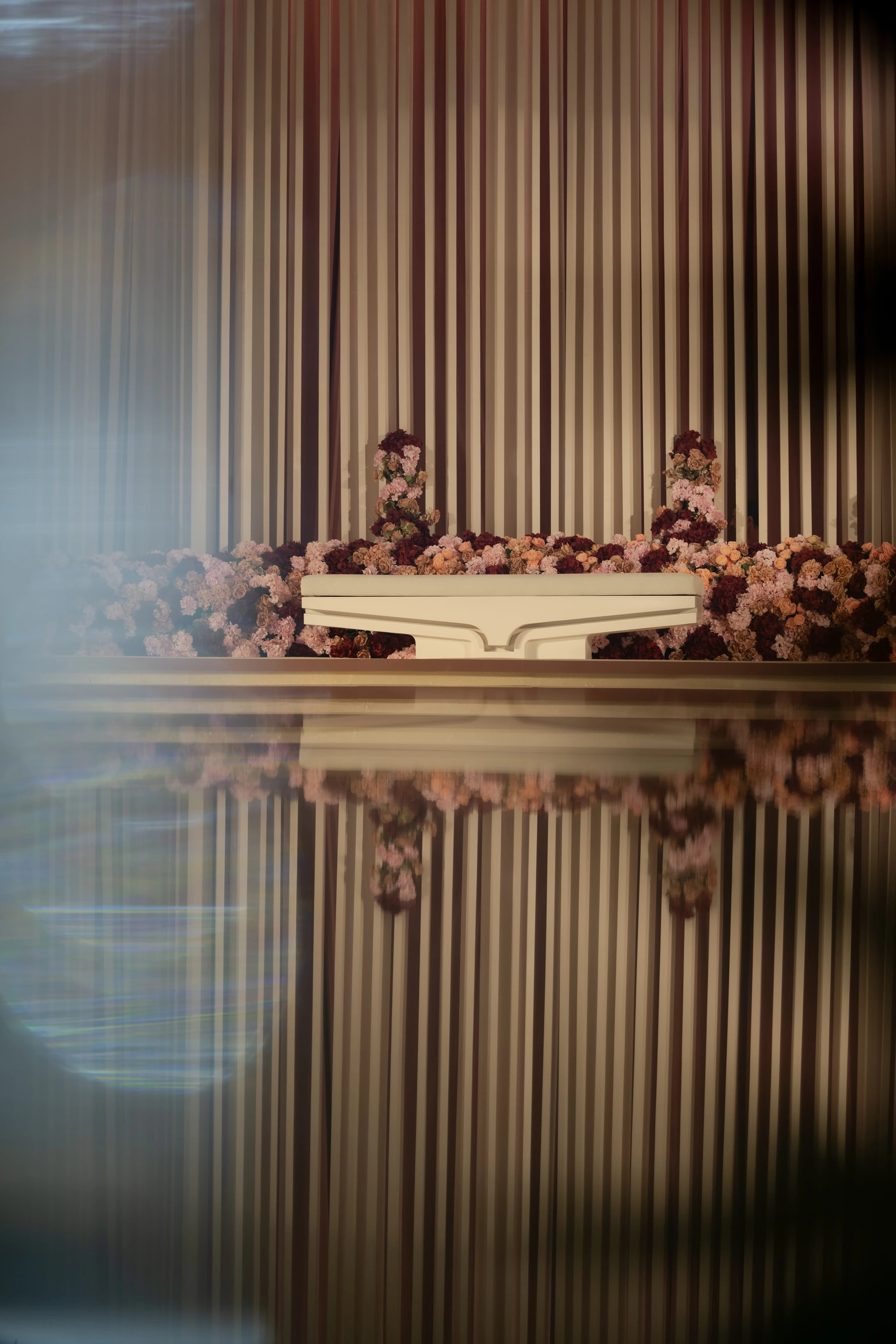
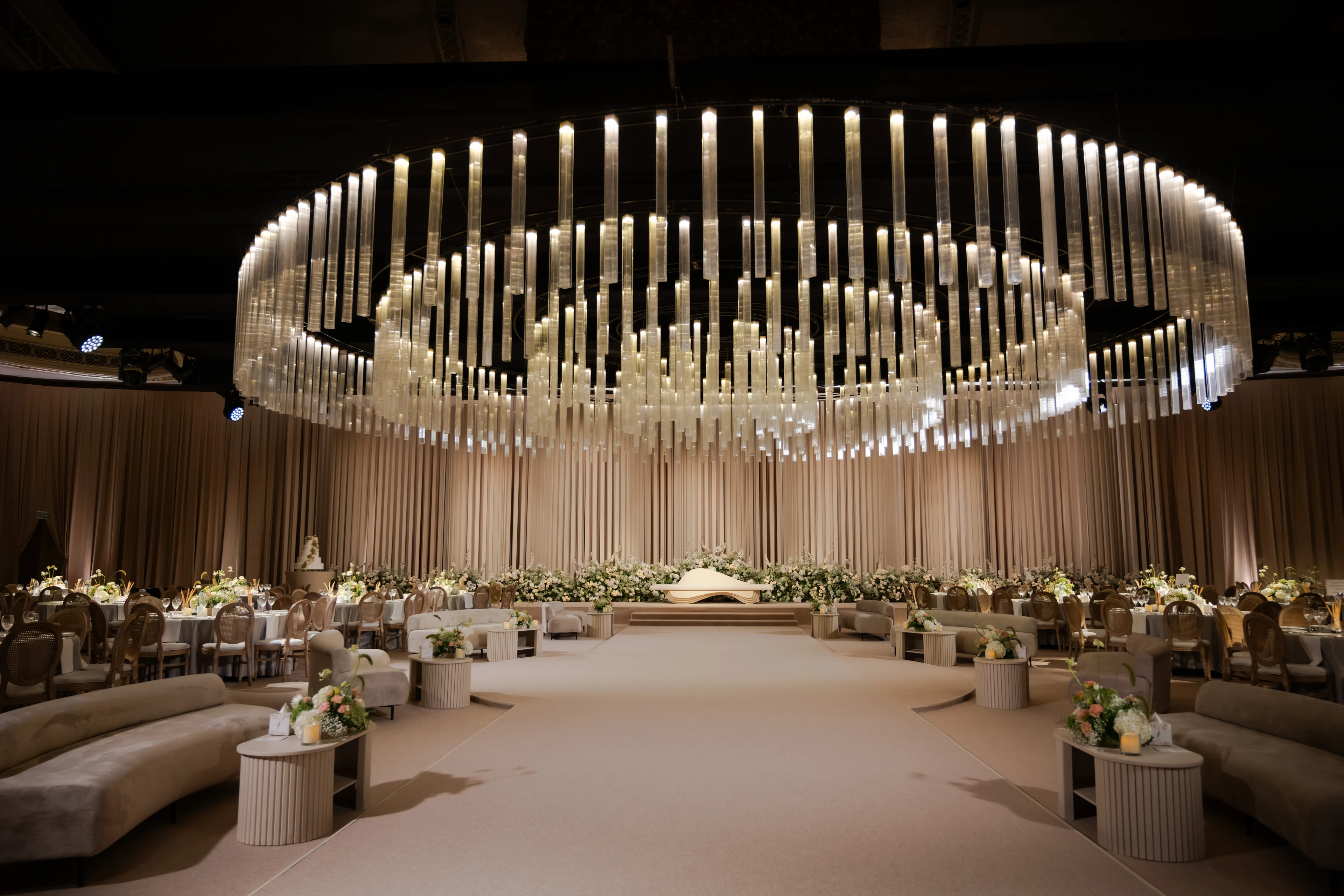
The women's celebration is usually the larger and more elaborate of the two. It takes place in a hotel ballroom or a wedding hall, with a decorated stage called the kosha at one end. Guests arrive dressed for the evening, there is music and dancing, and later in the night the bride makes her entrance, the zaffa, walking slowly towards the kosha where she will sit to receive her guests. In many families the groom, with close male relatives, joins her on the kosha towards the end of the night, and the couple leave together.
What does the groom wear?
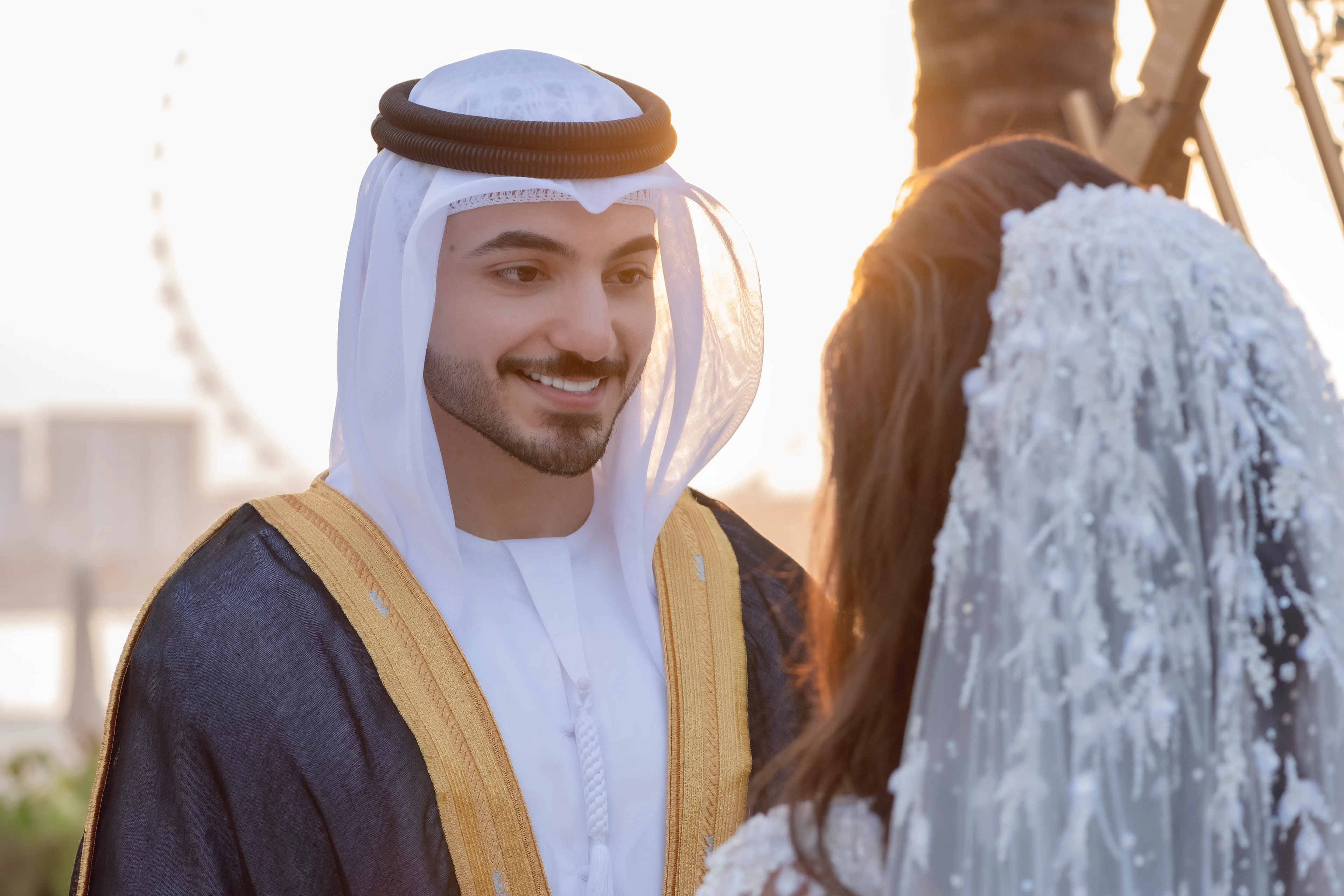
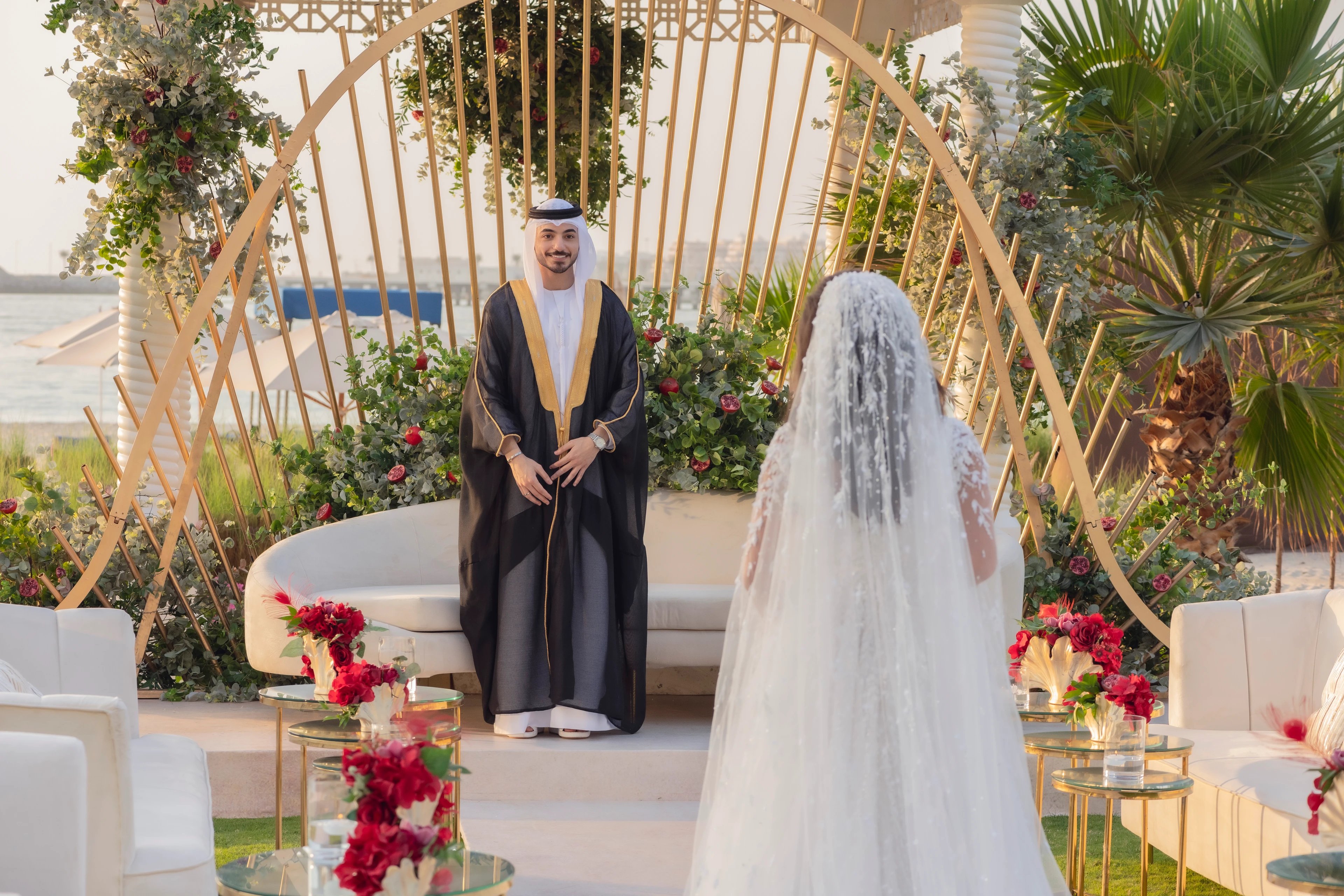
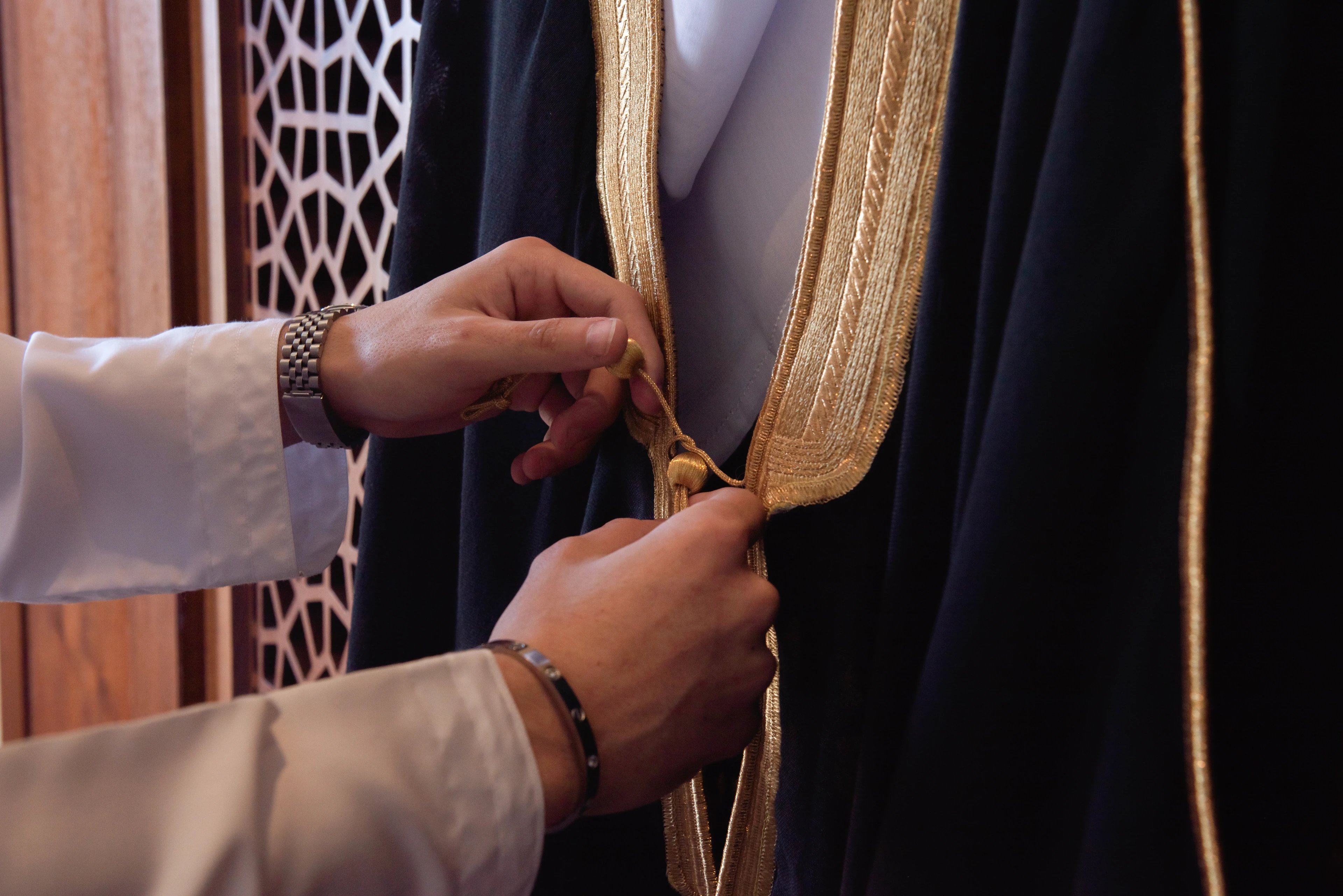
On the wedding night the groom usually wears a white kandura with a ghutra or other headdress and, over it, a bisht: a fine cloak, often black or brown, edged with gold thread. Fastening the bisht, a father adjusting his son's headdress, the gold trim catching the light: these small moments are part of the wedding as much as the bride's dress, and they are worth asking your photographer to look for. Our guide to the Emirati wedding dress covers the bride's side.
How do you plan the photographs around the traditions?
Because the celebrations are spread out and so many happen among women, the photography needs more planning than a single-day wedding. A few things to think about early:
- Decide which events you want photographed: the Milcha, the henna night, the women's celebration, and possibly the men's. Each needs its own timings.
- For women-only gatherings, an all-female team of photographers means guests can relax and the bride does not have to worry about who is in the room.
- Agree with your family which guests and moments should not be photographed, and tell your photographer before the day.
- Write a simple running order for each event. Our wedding day timeline is a good starting point.
- If the men's and women's celebrations are in different venues, plan the travel between them.
Pause Studio was founded in Dubai in 2017 and photographs Emirati weddings with an all-female team of photographers. If you are planning your own, our Emirati wedding photography page explains how we work, and you can send us your dates on WhatsApp.