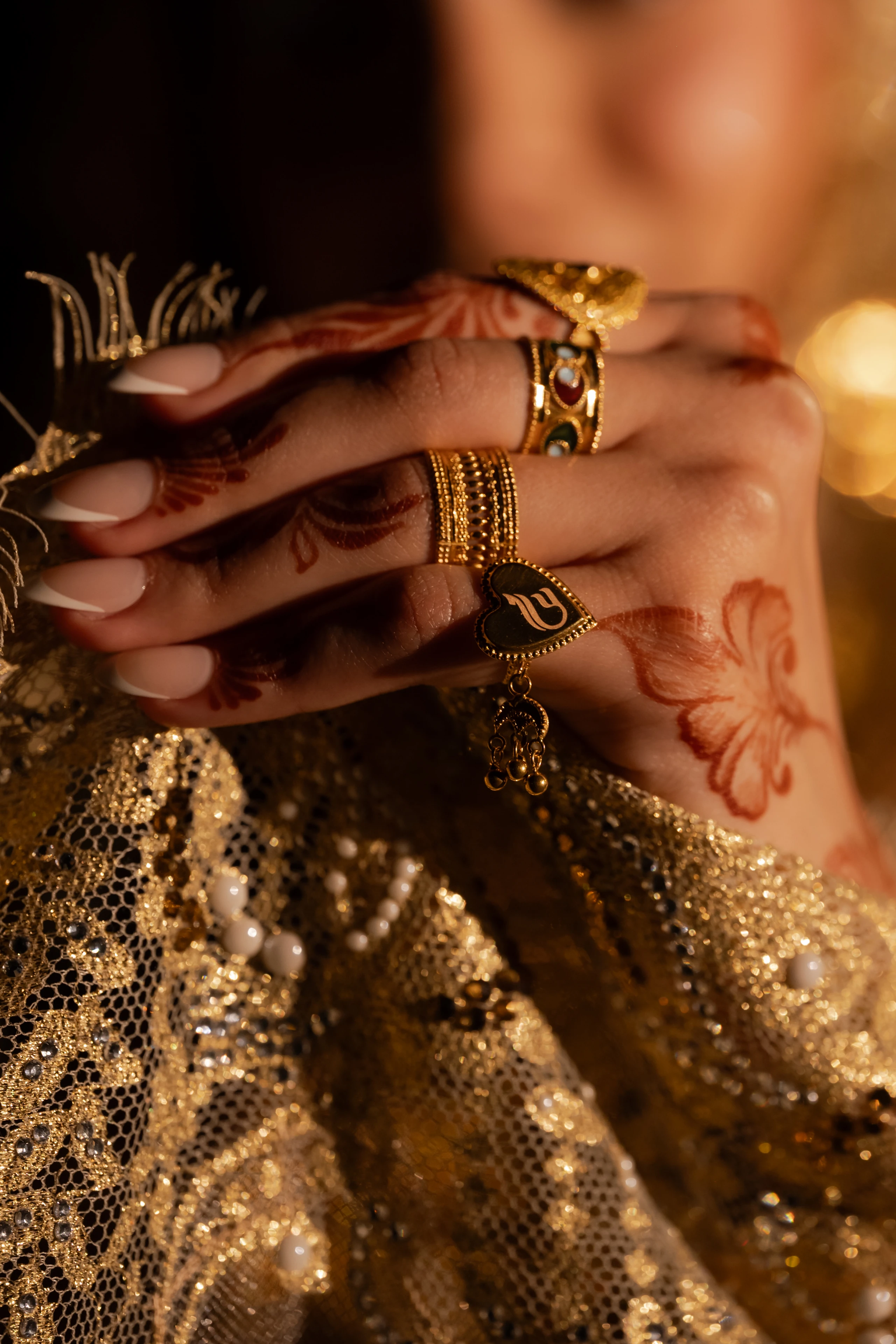
What is a henna night?
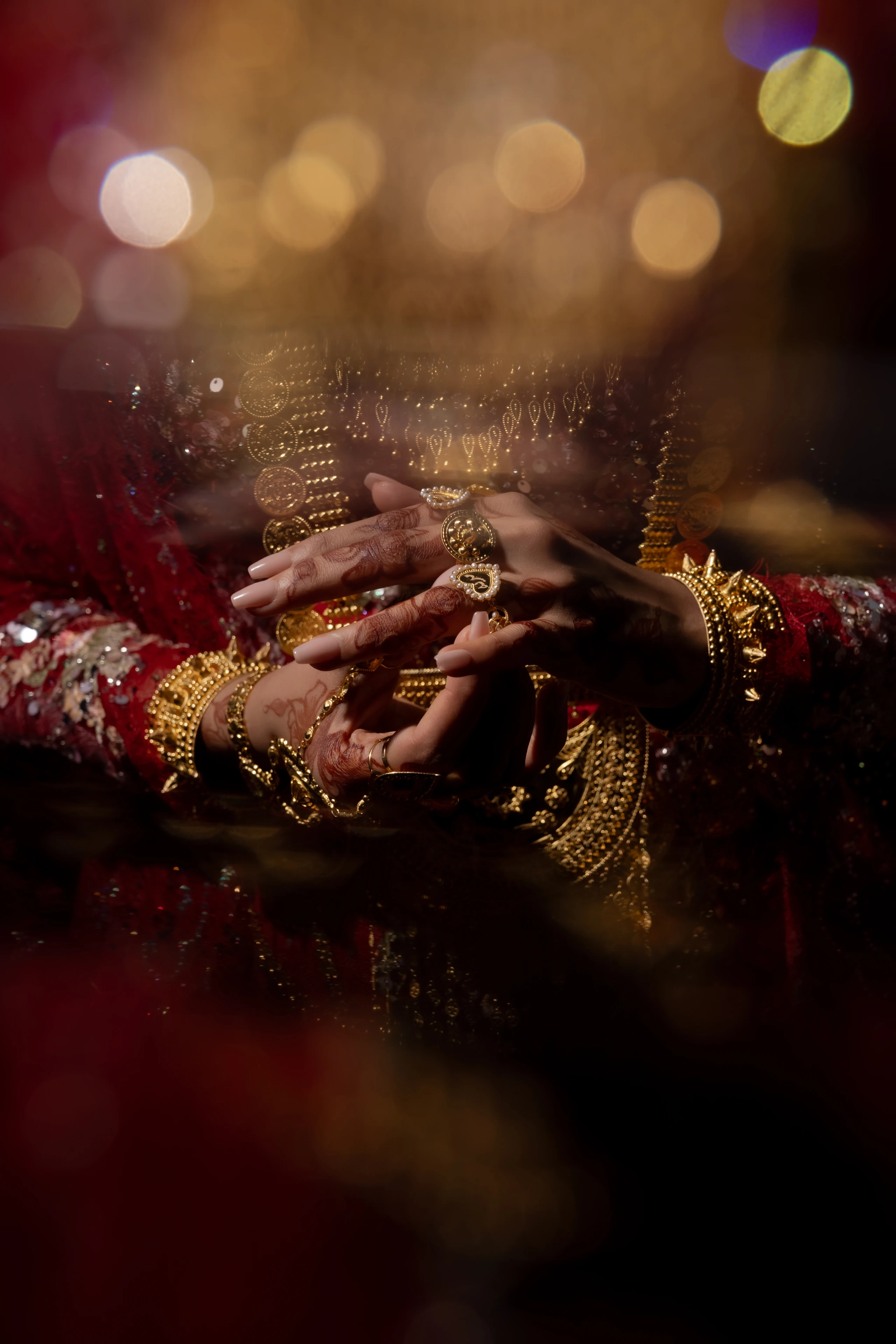
The henna night, laylat al-henna in Arabic, is a celebration held for the bride before her wedding. Her hands, and often her feet, are decorated with henna paste, which stains the skin a deep reddish brown and is said to bring blessings and good fortune for the marriage. Versions of the henna night are held across the Arab world, Turkey, South Asia and North Africa, each with its own music, clothes and customs. In the UAE it is traditionally an evening for the women of the family and the bride's friends.
It usually takes place a few days before the wedding, which gives the henna time to darken. Many families hold it at home, in a garden or courtyard; others take a hall or a hotel ballroom. Our guide to Emirati wedding traditions explains where it falls among the other events.
How do you plan a henna evening?
- Timing. Allow the henna artist enough time. Detailed designs on both hands and feet can take several hours, so many brides have the henna started in the afternoon or done the day before, then celebrate in the evening.
- The henna artist. Book early in wedding season, look at photographs of their recent work on real hands, and agree the design and the coverage, from fingertips only to the elbow.
- The guest list. Henna nights are usually smaller than the wedding. Decide early whether it is women only, or whether the groom and his family will join for part of the evening.
- Music. Traditional songs, a live group of female singers and drummers, or a playlist. Agree when the music starts and stops around the henna itself.
- Food and coffee. Arabic coffee, dates, sweets and a buffet or plated dinner are common. Plan the serving so it does not clash with the main moments.
What are some henna night ideas?
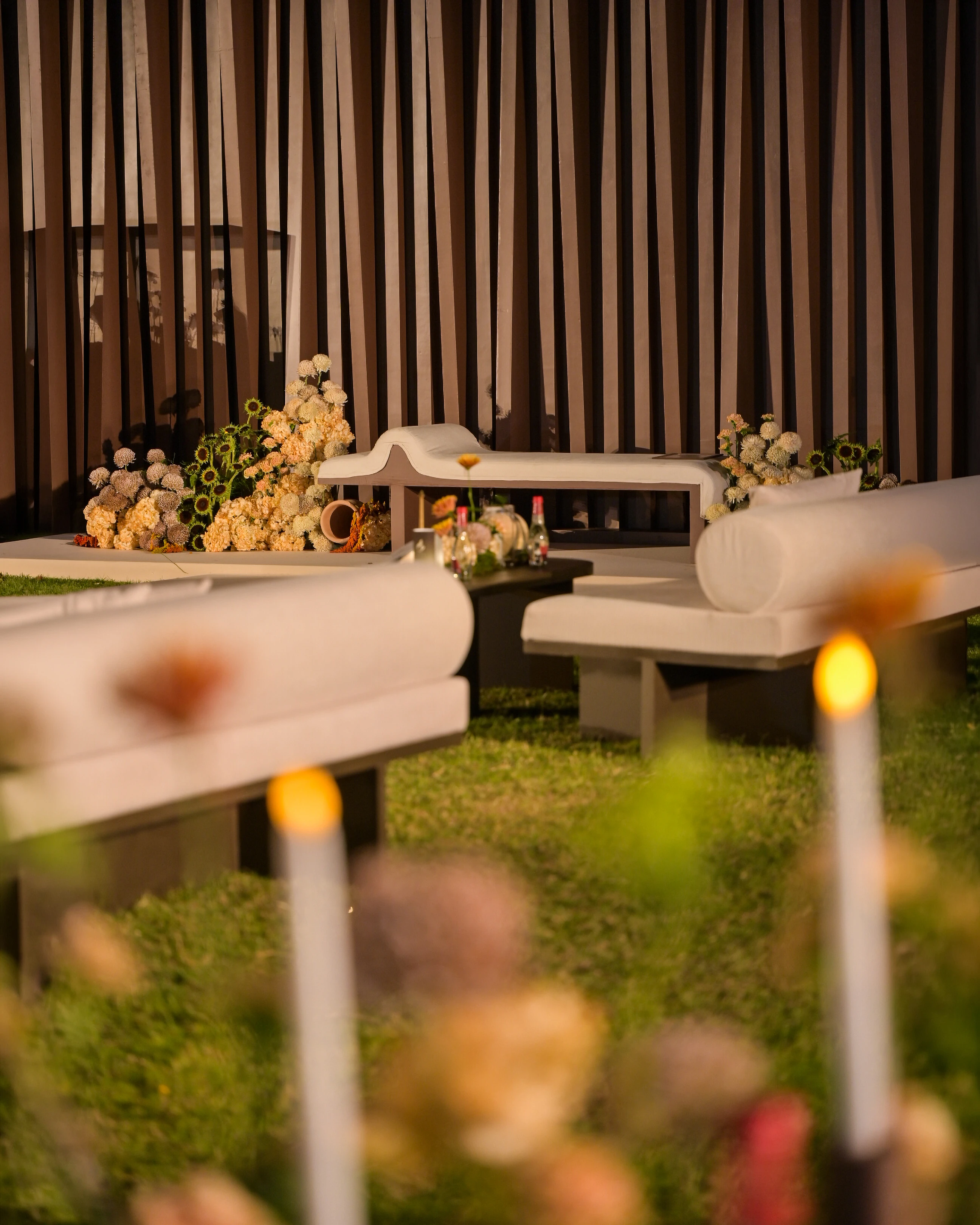
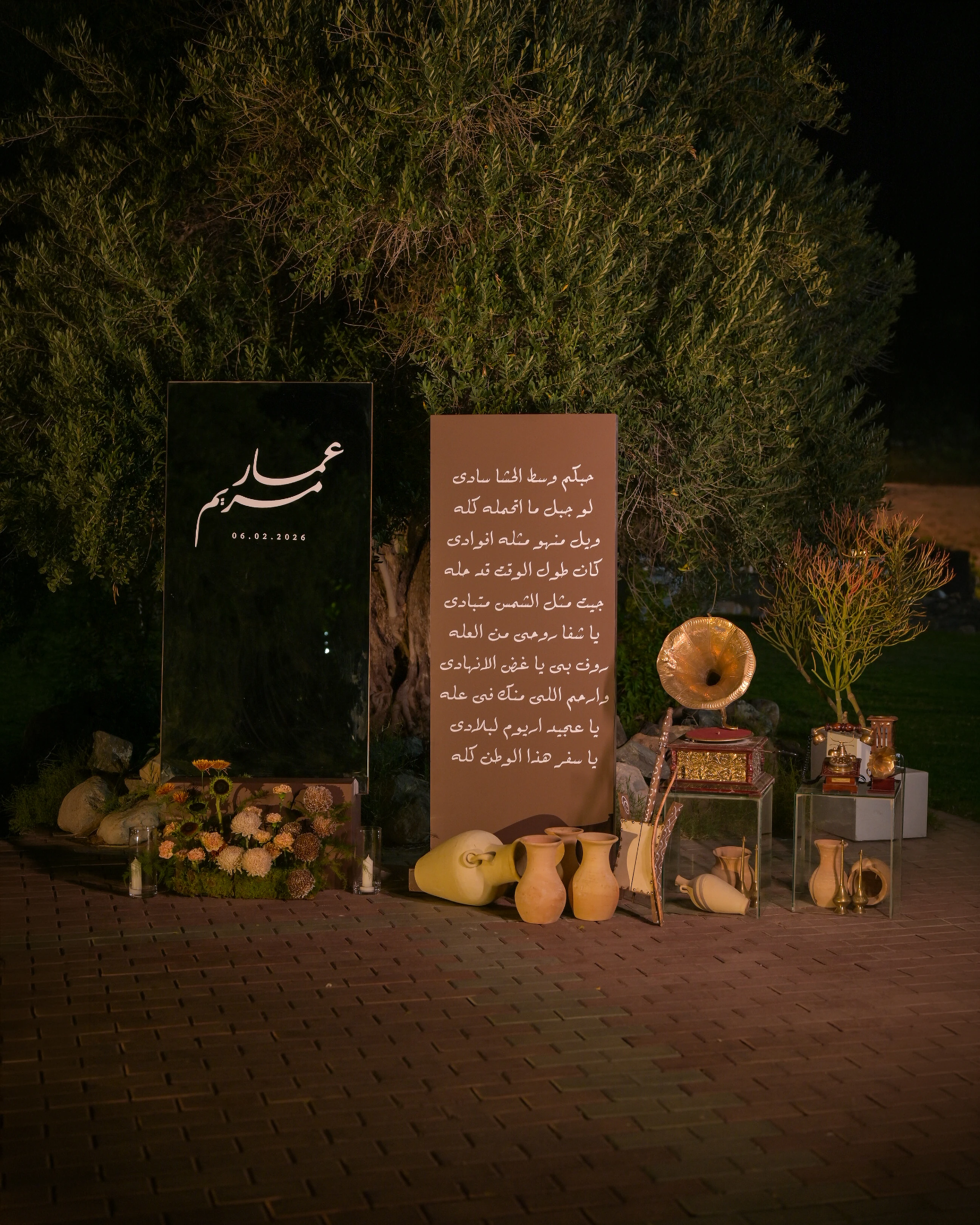
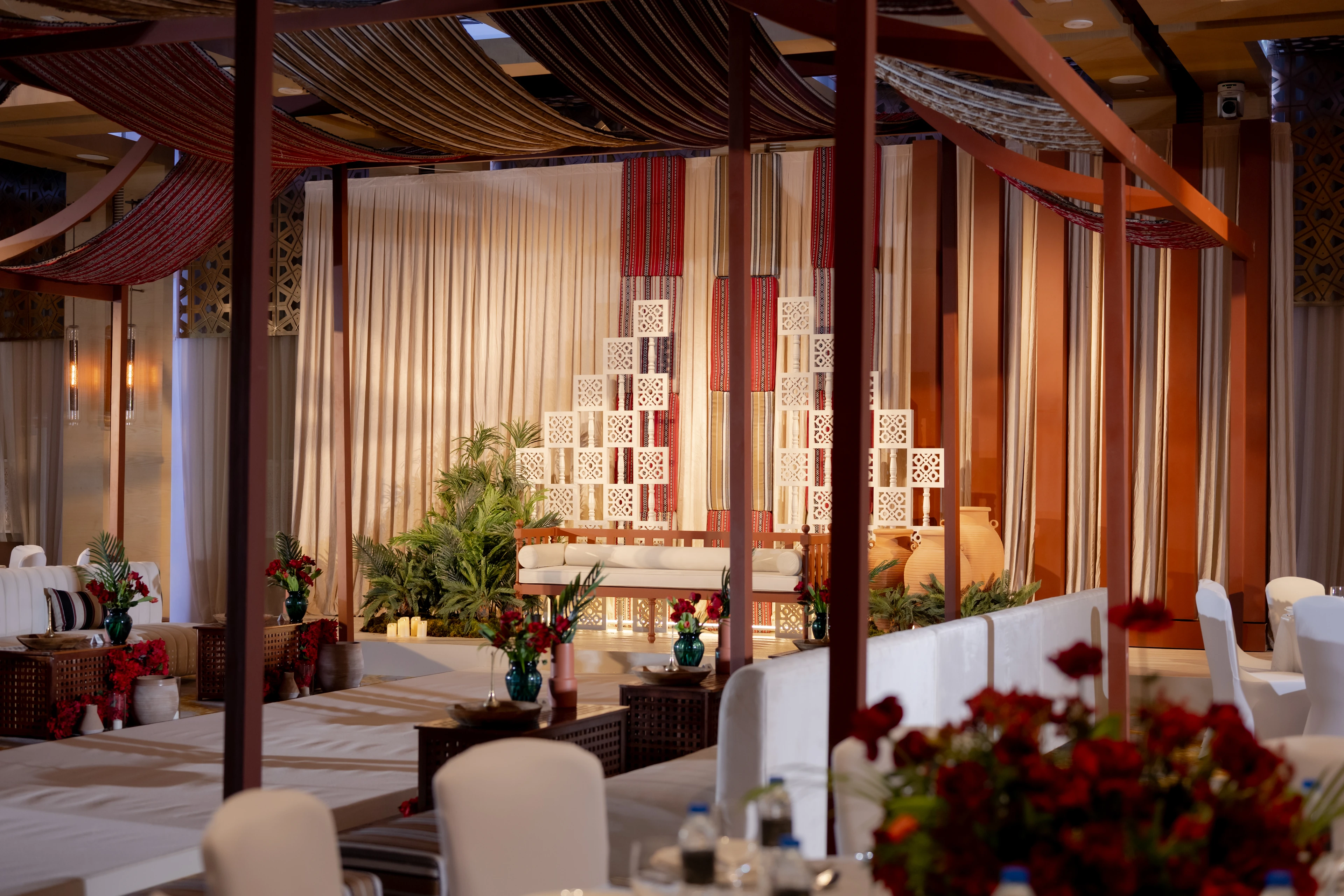
Henna nights are where families bring in heritage most freely. A few ideas that look beautiful on the night and in the photographs:
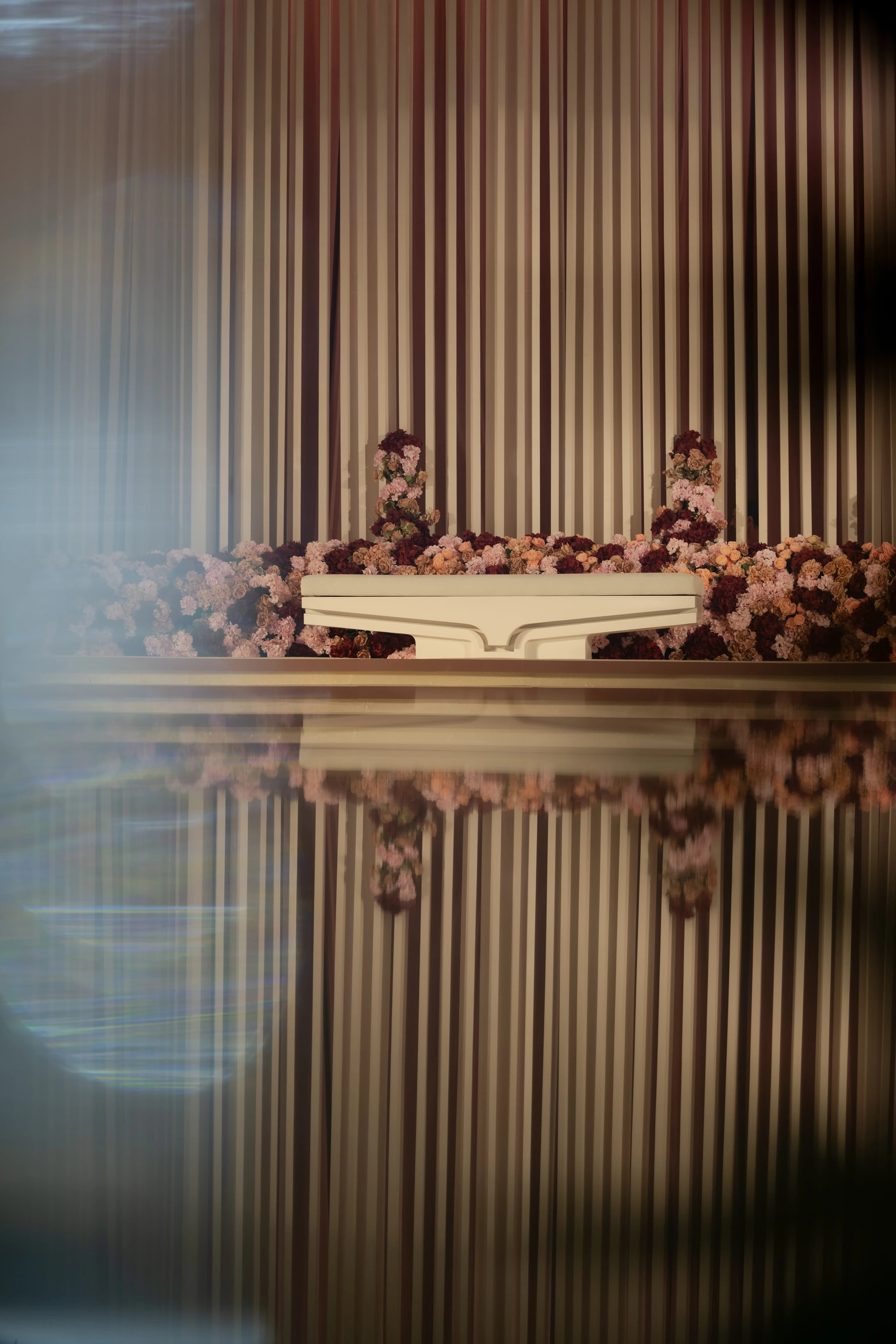
- A small henna kosha with traditional touches: sadu weaving, carved wooden benches, palm fronds, clay jars and brass lanterns. Our guide to the kosha has more.
- Calligraphy: a line of poetry, a verse or the couple's initials on a sign, a cake or the coffee cups.
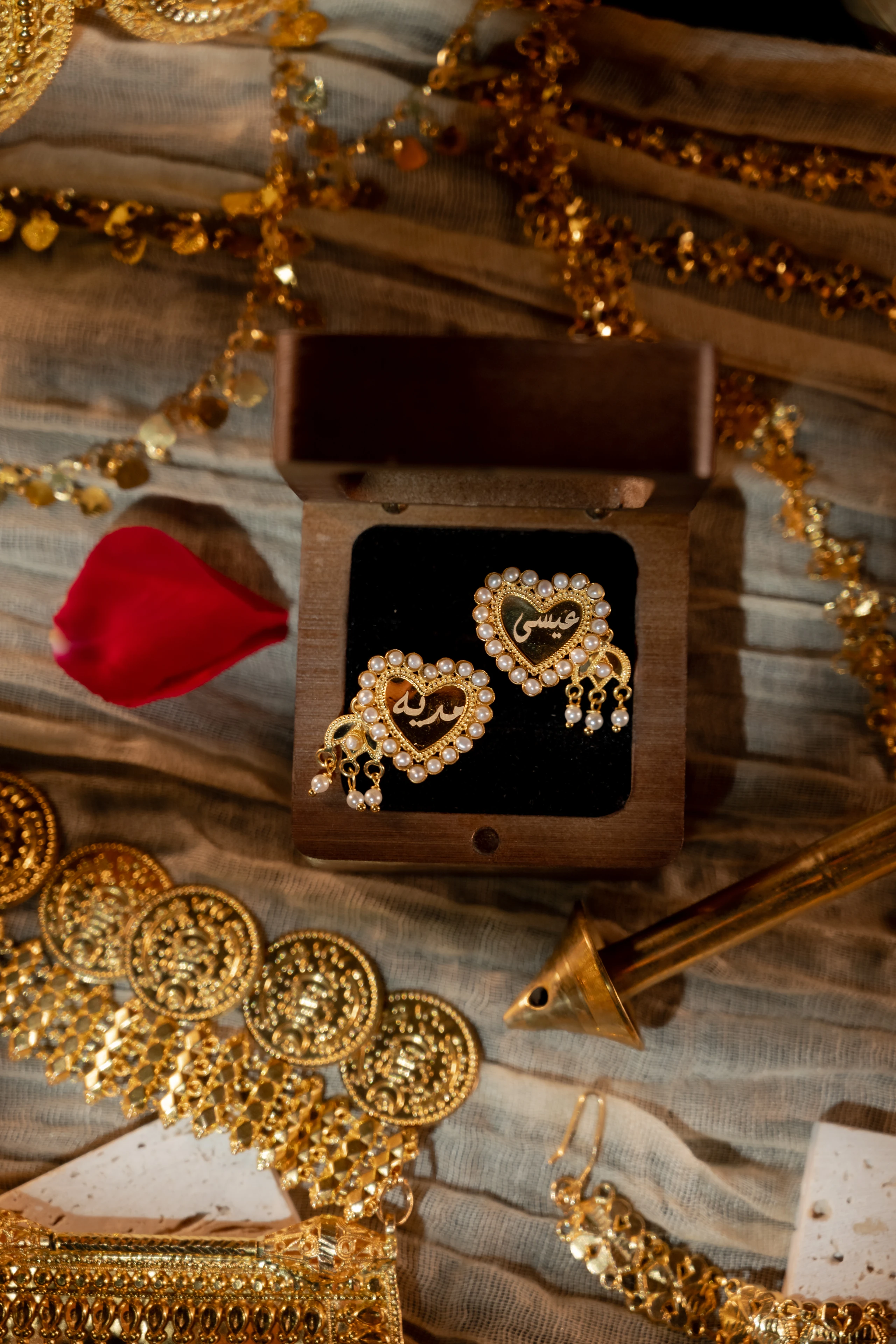
- A tray for the henna with flowers, candles and the bride's jewellery laid out around it.
- Perfume and oud: a burner at the door and small bottles for guests to take home.
- Majlis seating on the floor or low sofas, so guests can gather close around the bride.
- A letter or a gift from the groom, delivered during the evening.
What does the bride wear at a henna night?
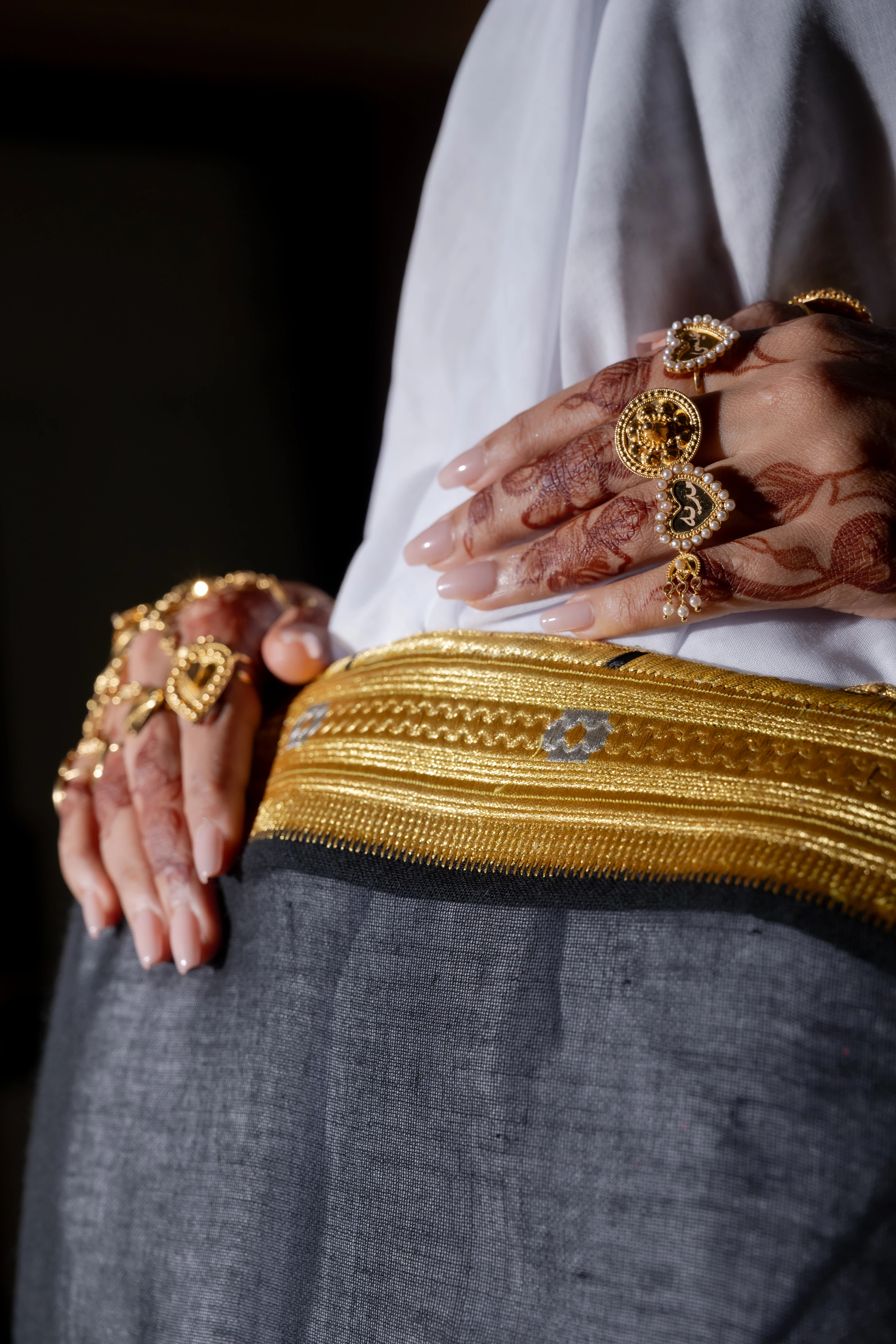
The henna night is the evening for colour and gold. In many Gulf families the bride wears green, though deep reds, golds and jewel tones are just as popular. Embroidered dresses and heavy gold jewellery, sometimes heirloom pieces, are traditional. Plan the sleeves with your henna artist: you will want your hands and wrists free while the paste dries. Our guide to the Emirati wedding dress covers the traditions in more detail.
How should a henna night be photographed?
The henna night is intimate, and the photographs should feel the same. A few things help:
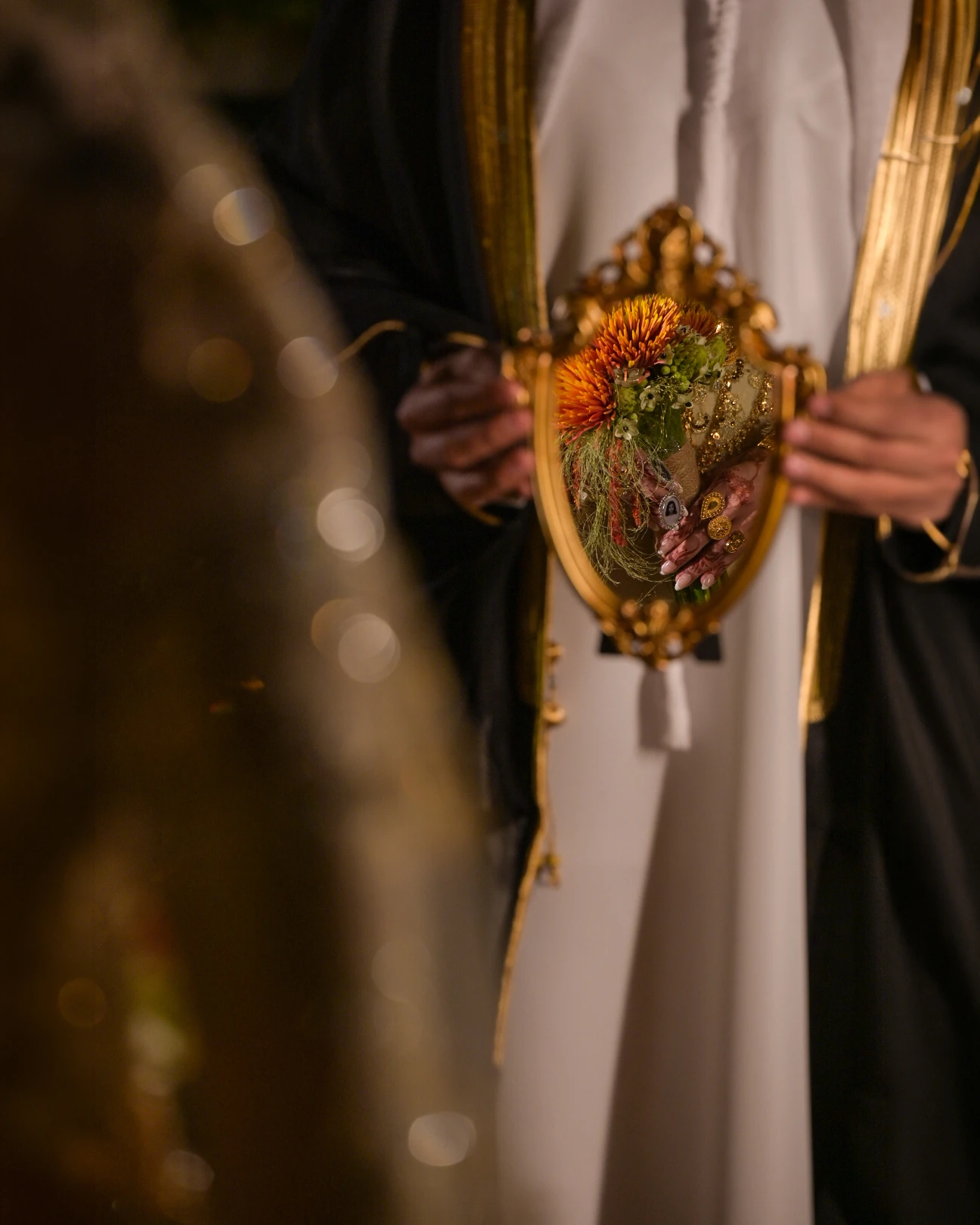
- Have the henna photographed while it is being applied, not only when it is finished. The paste going on, the artist's hands and the design taking shape tell the story.
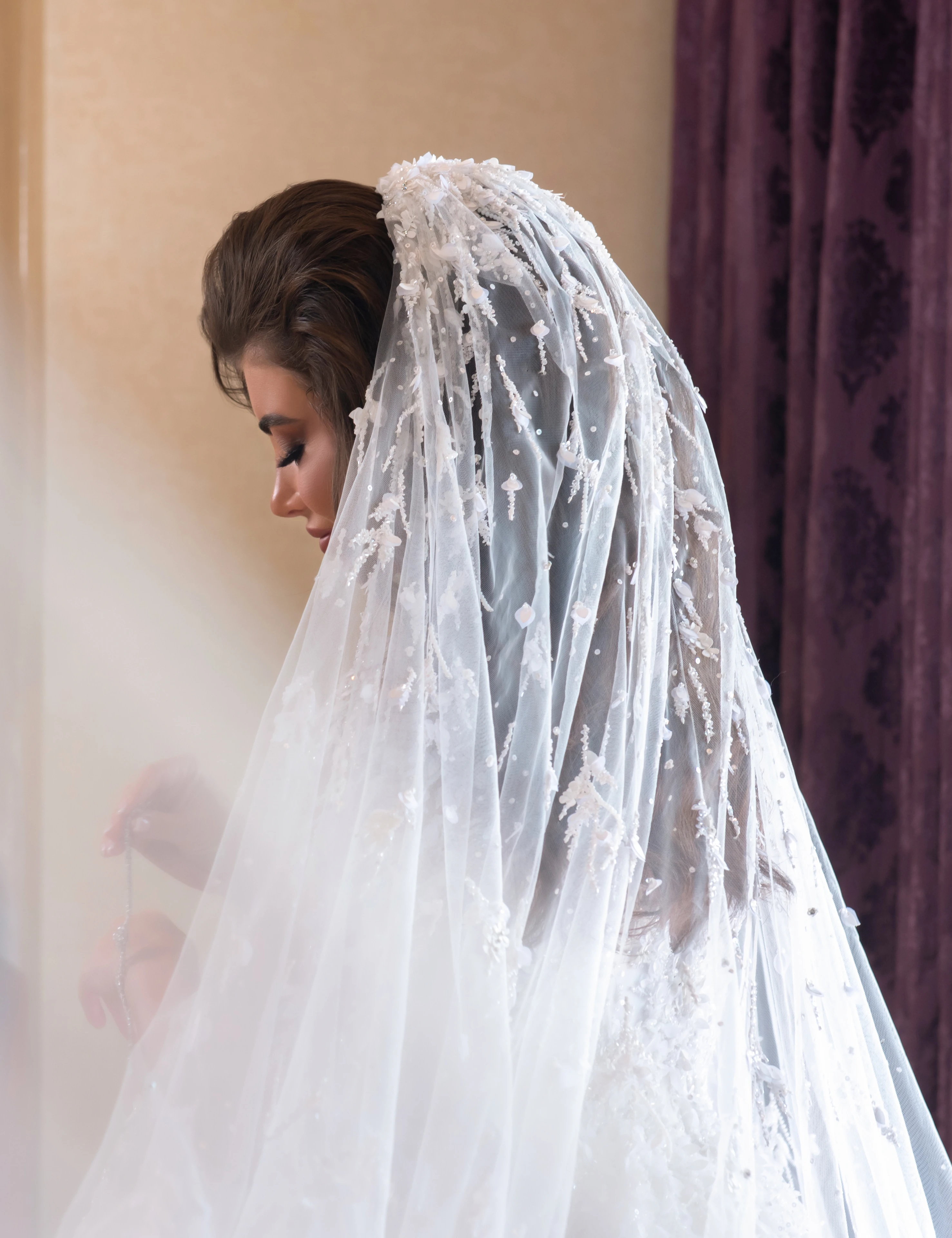
- Plan time for the details before guests arrive: the dress, the jewellery, the tray and the setting.
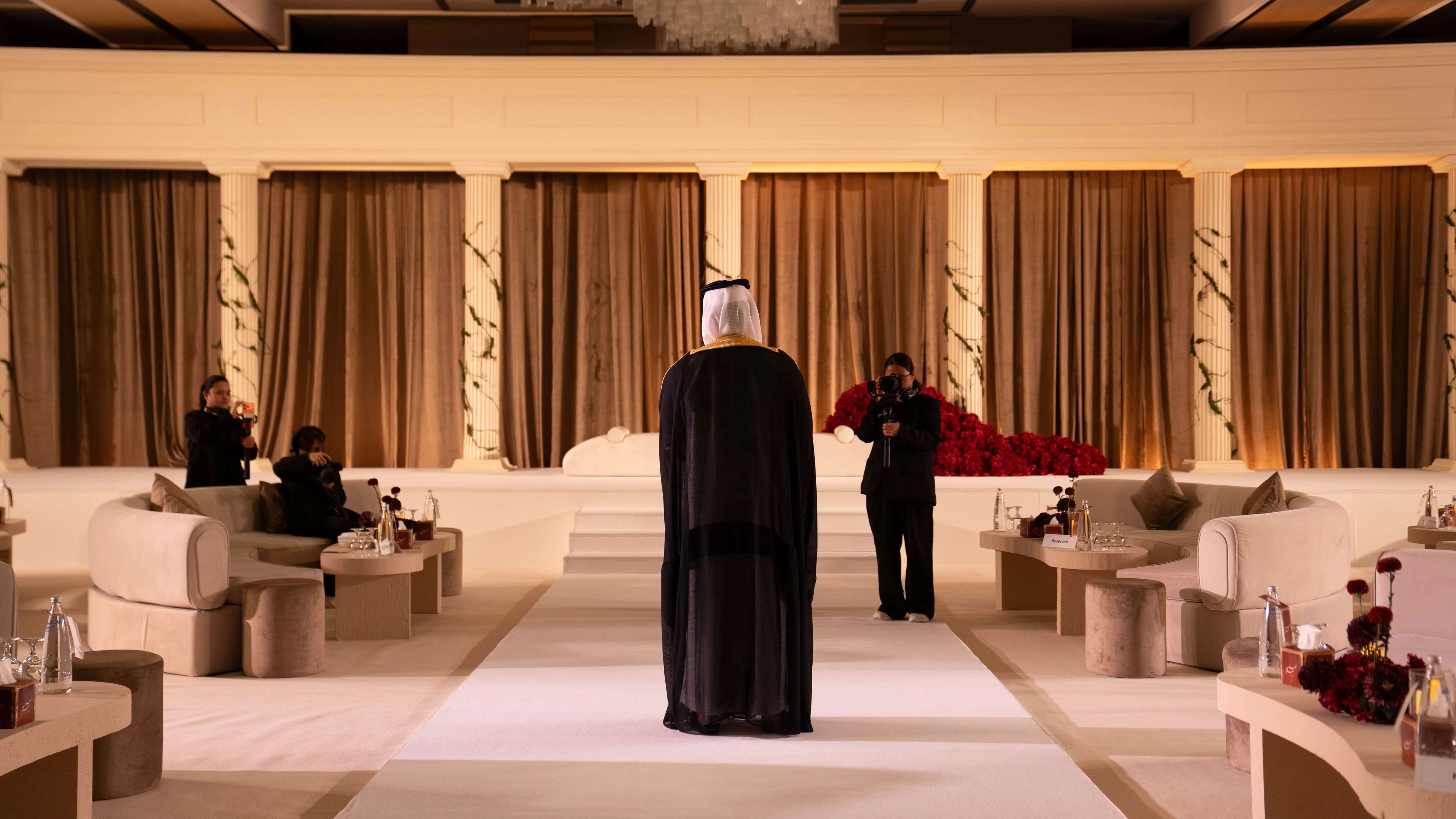
- If the evening is women only, consider an all-female team of photographers so guests can relax.
- Tell your photographer which relatives matter most, so the grandmothers and aunts are photographed with you.
- Think about the light. Candles and lanterns are beautiful but dim, so ask for some soft light near where you will sit for the henna.
We photograph henna nights in Dubai and Abu Dhabi as part of our henna night photography service, on their own or alongside the Milcha and the wedding.