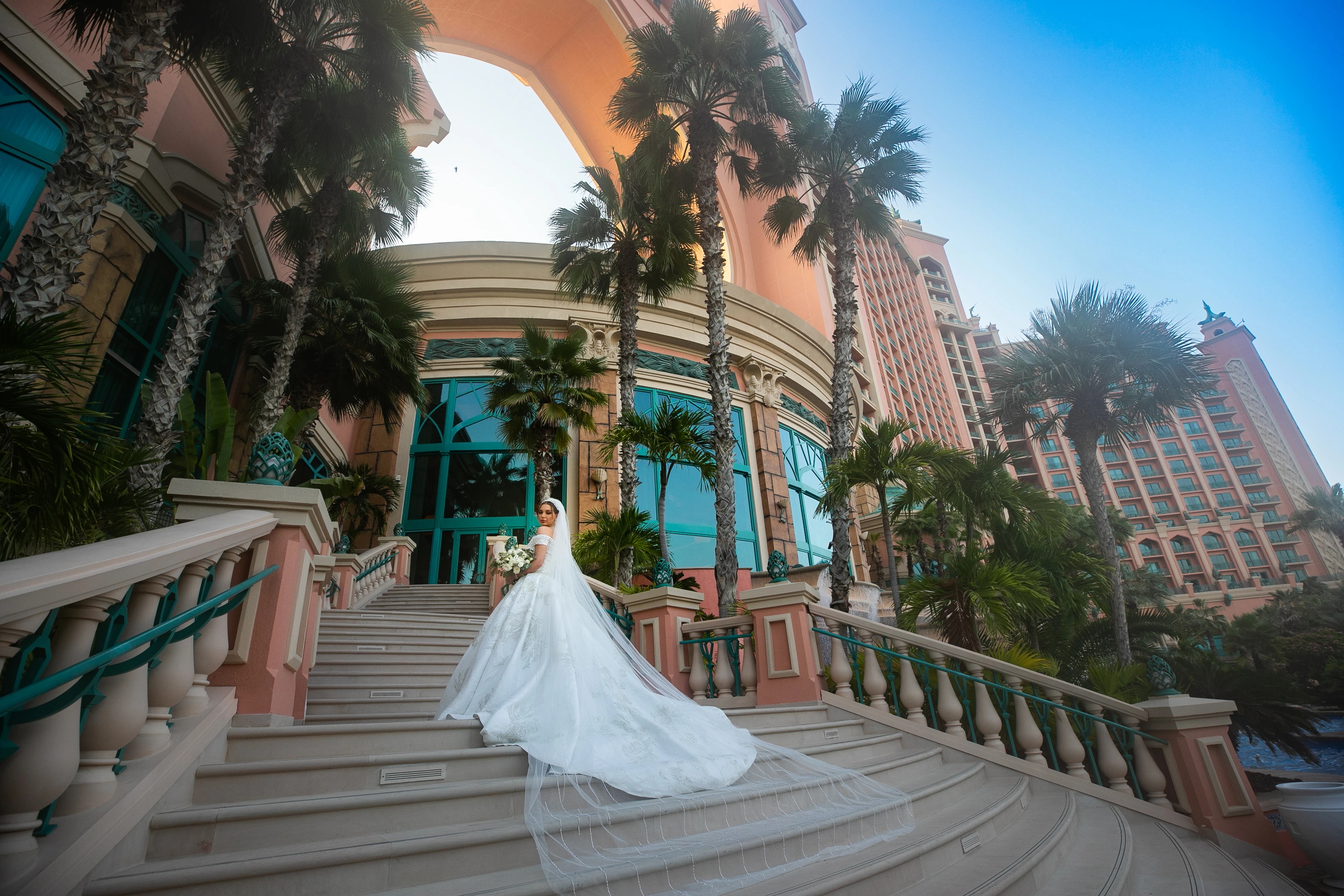
What is a zaffa?
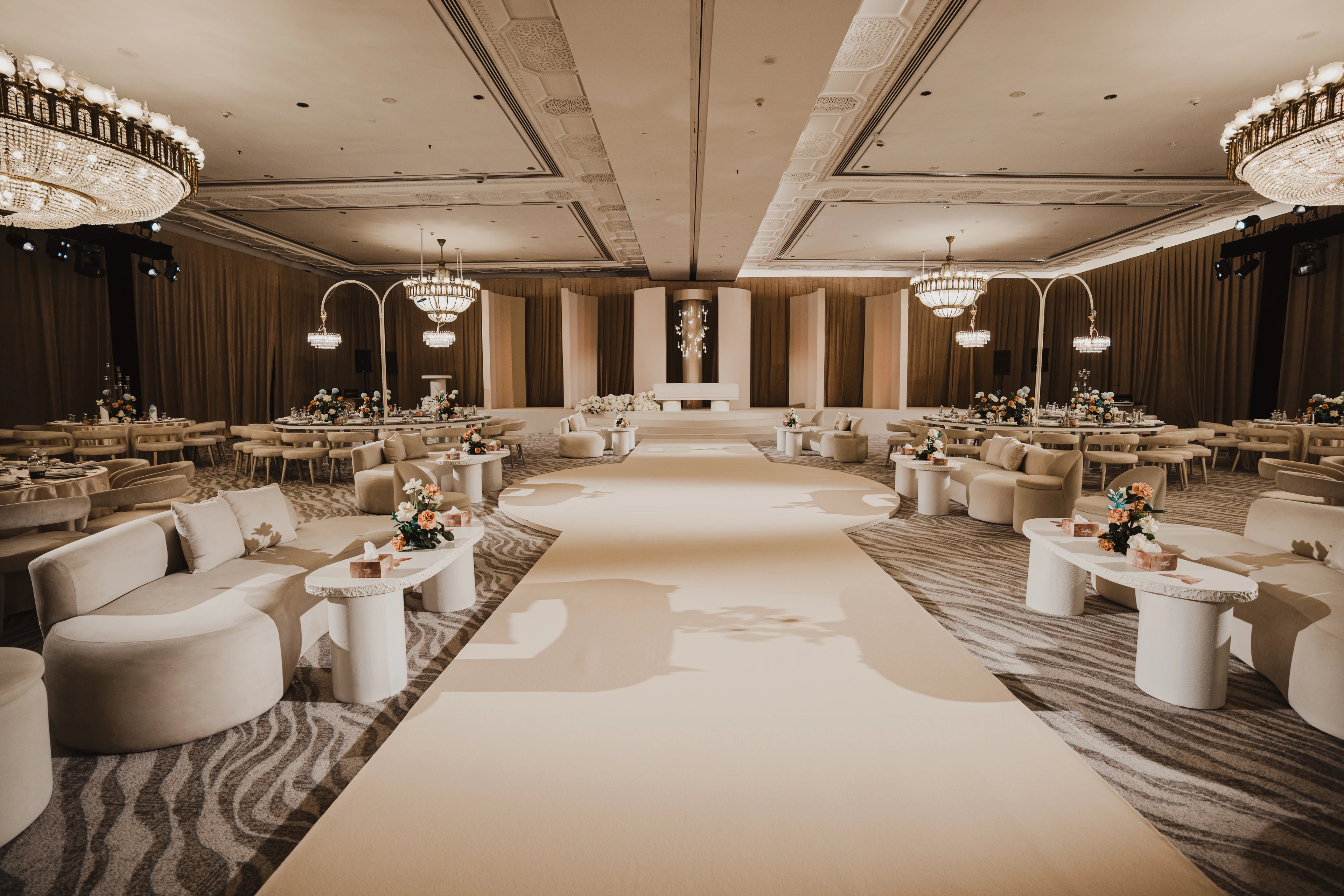
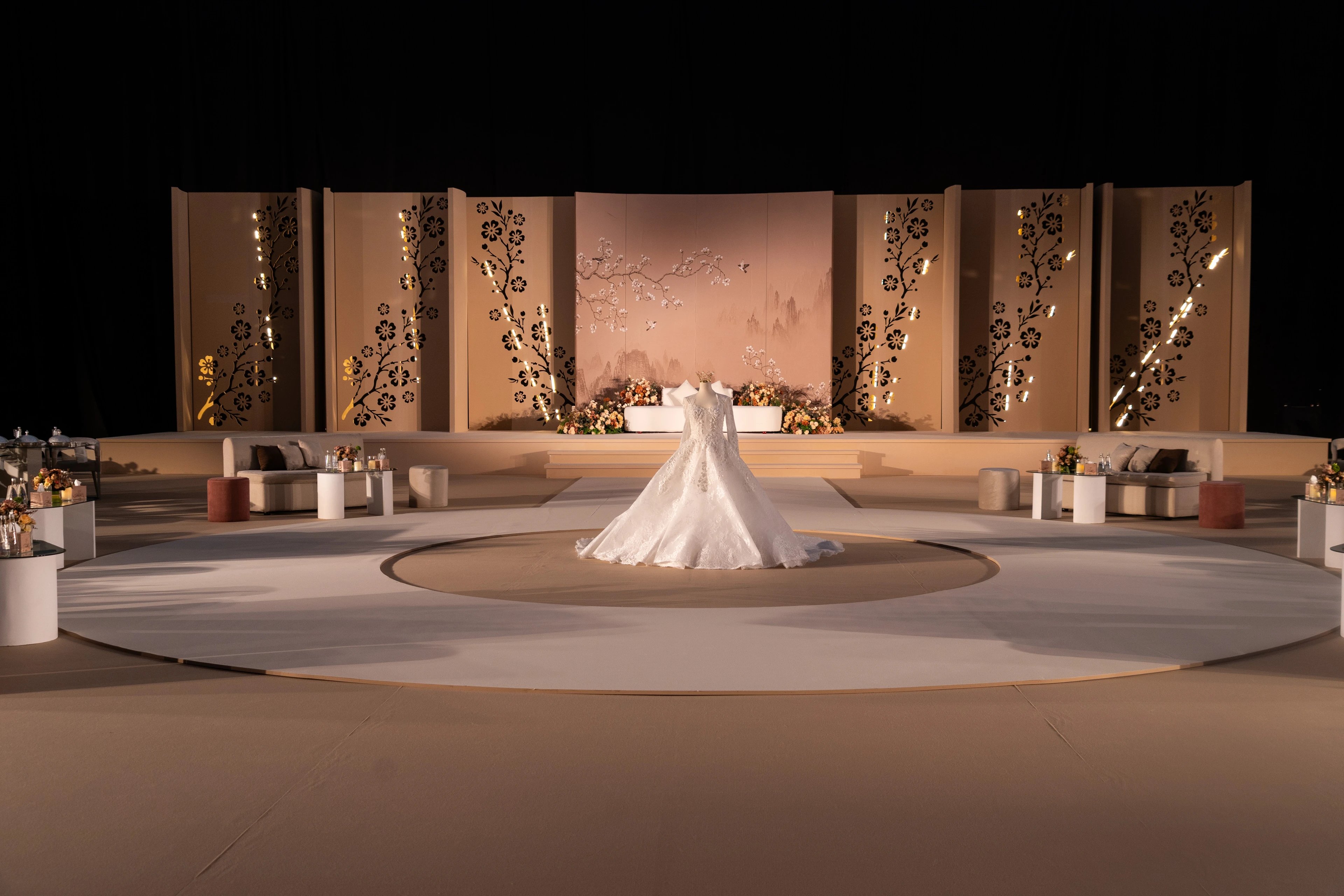
Zaffa (زفة) is the Arabic word for a wedding procession. Its form changes from country to country. In the Levant and Egypt it is often a loud, joyful procession with drummers, dancers and singers leading the couple into the party. In the UAE and much of the Gulf, the zaffa usually refers to the bride's entrance into the women's celebration: the lights dim, a chosen song or poem begins, and the bride walks slowly down a runway towards the kosha, where she will sit for the rest of the evening.
The pace is deliberately slow. Guests stand, phones come out, and for a few minutes everyone in the room is looking at the bride. In many families her mother or a close relative walks with her or waits at the kosha, and the groom joins later in the night. Our guide to Emirati wedding traditions explains where the zaffa sits in the whole celebration.
How do you choose the zaffa music?
The zaffa song sets the mood of the entrance, and many brides spend longer choosing it than any other detail. Some choose a traditional Emirati zaffa song or a sung poem, sometimes performed live; others choose a song that means something to them or a piece written for them. Whatever you choose, check its length against the length of the runway. A three-minute song for a thirty-second walk leaves you standing at the kosha with nothing to do; a short song for a long runway ends before you arrive.
How should the runway be lit?
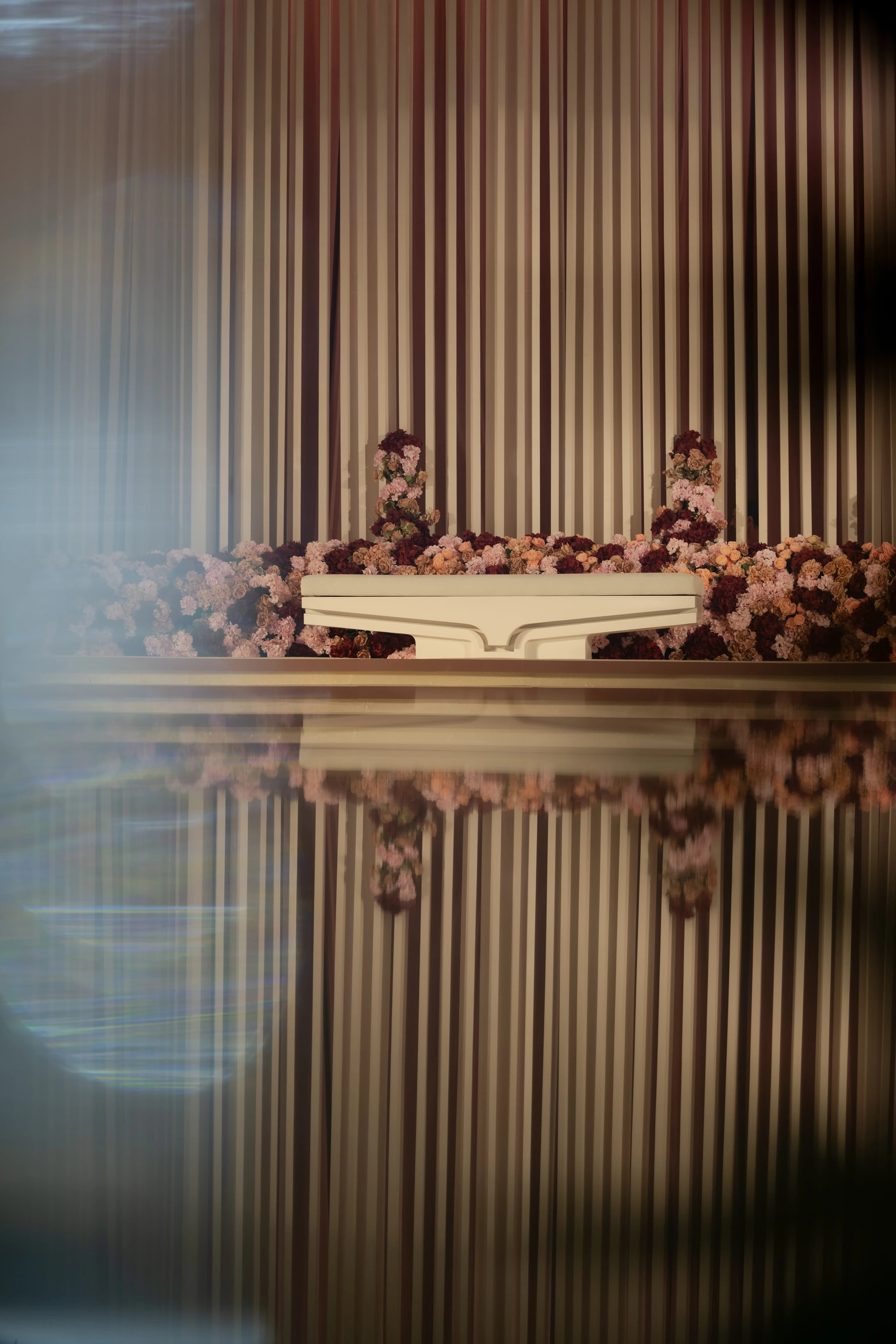
The design of the runway and the lighting of the entrance decide what the photographs will look like. A few points to discuss with your venue and kosha designer:
- Light on the bride, not just on the room. Dramatic effects such as haze, moving lights and coloured spots look striking but can leave the bride in darkness. Ask for a soft follow spot or a gentle wash along the runway.
- A clear line of sight. Keep the runway free of tall arrangements and make sure guests don't step into the aisle with their phones. A relative who can politely keep the aisle clear is worth asking for.
- Where the photographers stand. Agree on positions in advance: usually one at the end of the runway facing the bride, and one to the side or behind her to show the room. Second photographers matter most here.
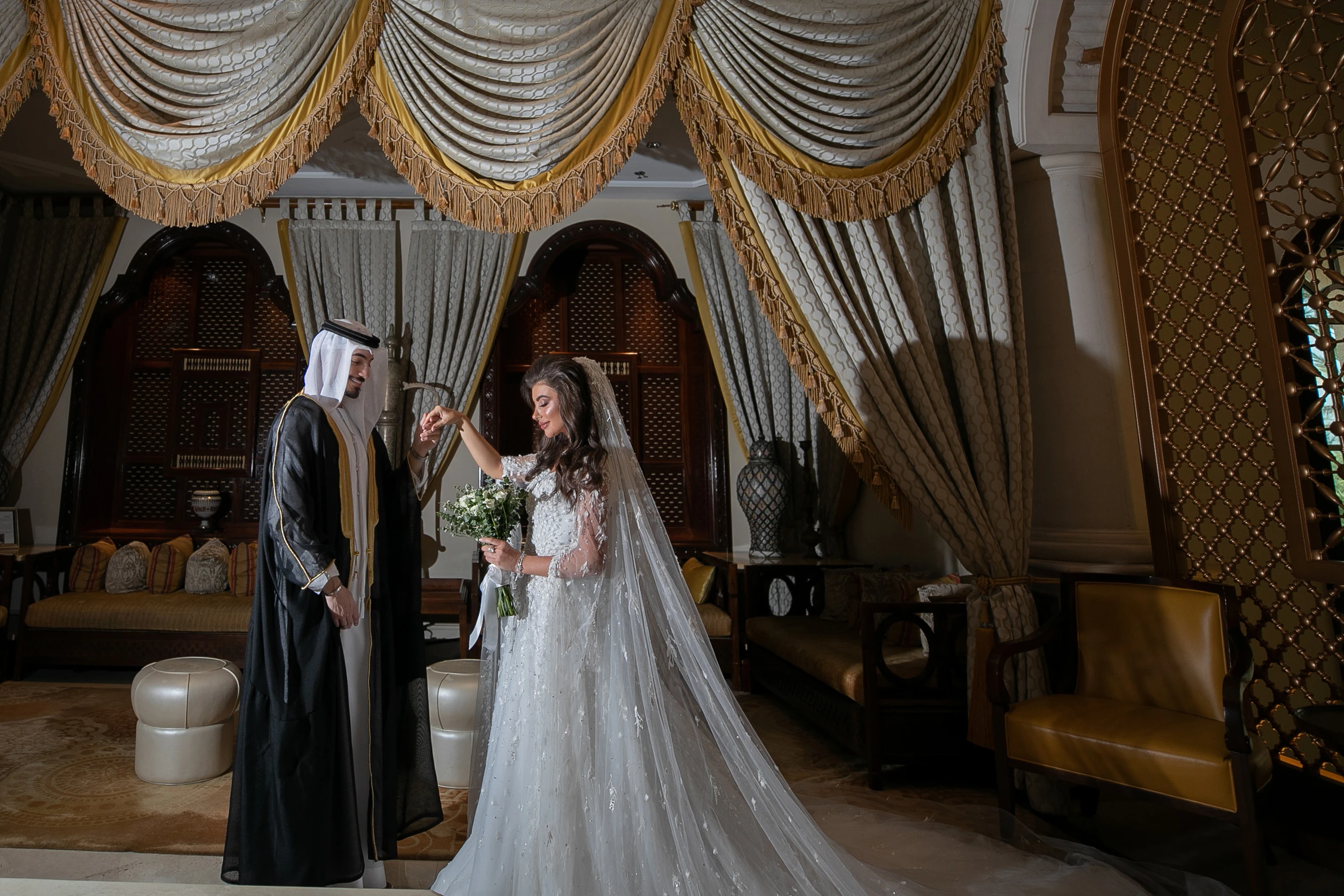
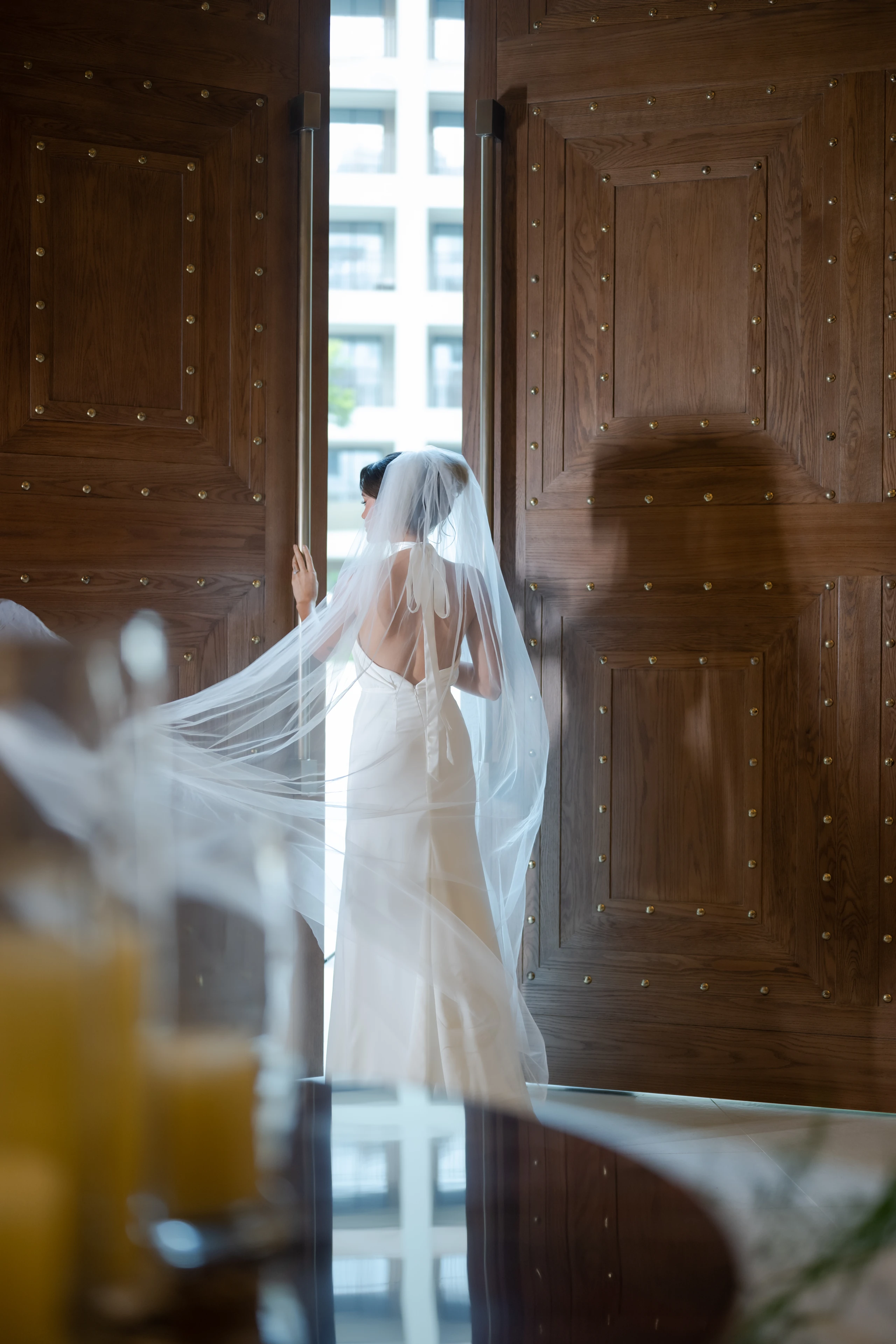
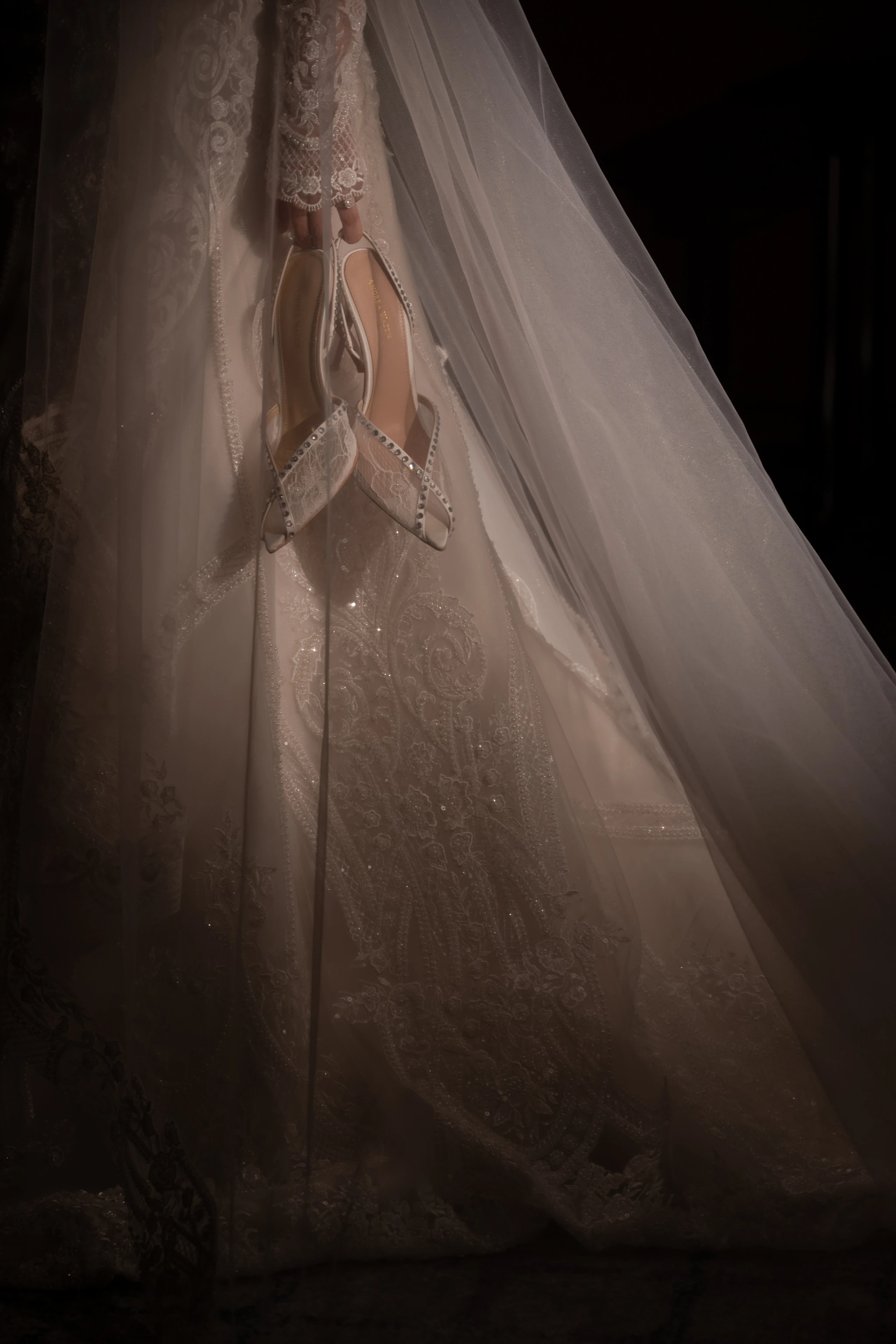
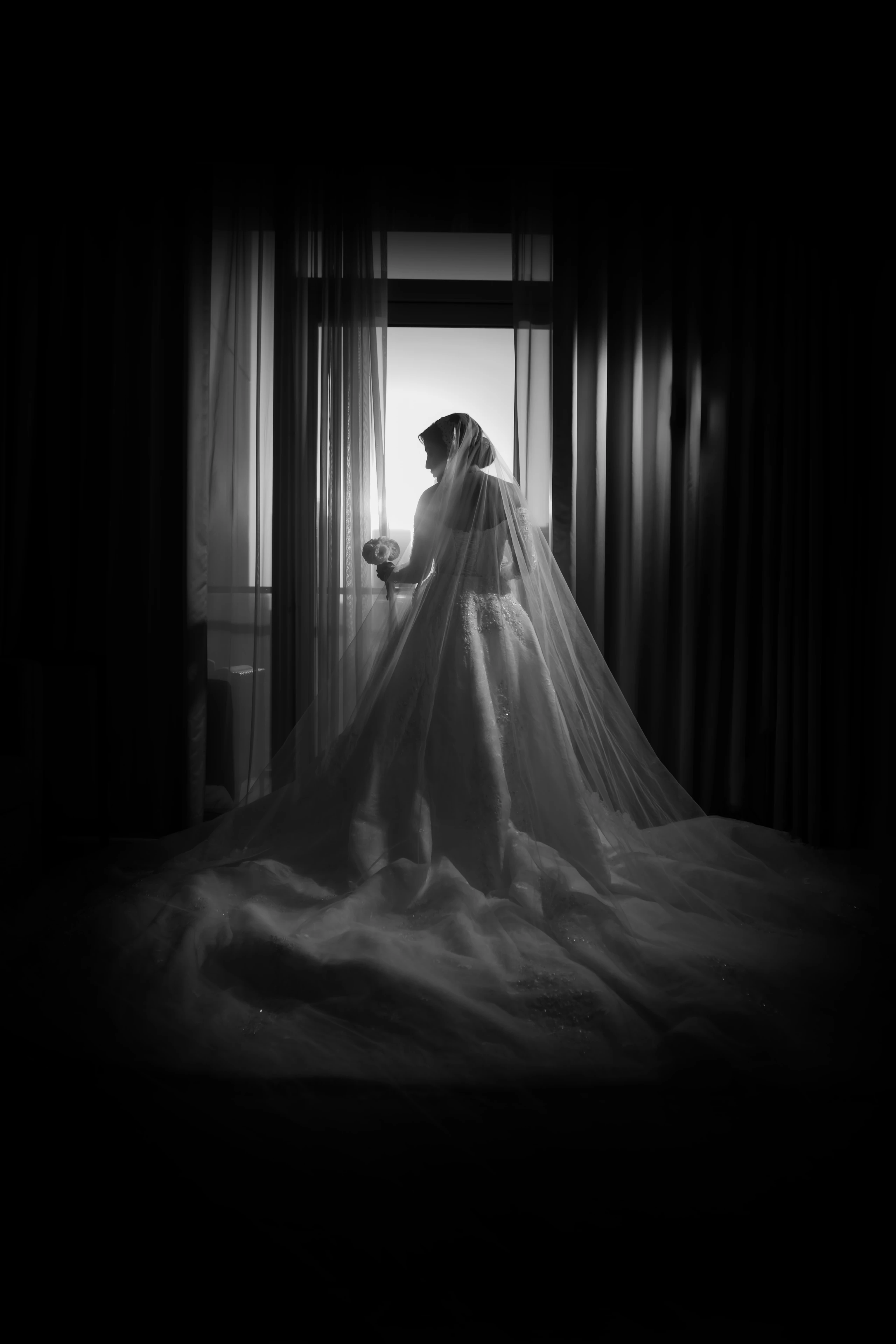
- The train and the veil. Long trains and veils look beautiful in motion. Ask someone to arrange them once you start walking, and walk slower than feels natural.
How should the entrance be photographed and filmed?
The zaffa is the moment where film adds the most. A photograph shows the veil and the expression; a film keeps the music, the movement and the sound of the room. Many brides choose wedding films for exactly this reason. If you have both, the photographer and the videographer need to agree positions so they don't block each other on a narrow runway.
For the photographs, think in three parts: the moment you appear at the door, the walk itself, and your arrival at the kosha with your family waiting. The first and last are easy to miss if only one photographer is covering the room, so mention them when you plan your wedding day timeline.
What happens before the zaffa?
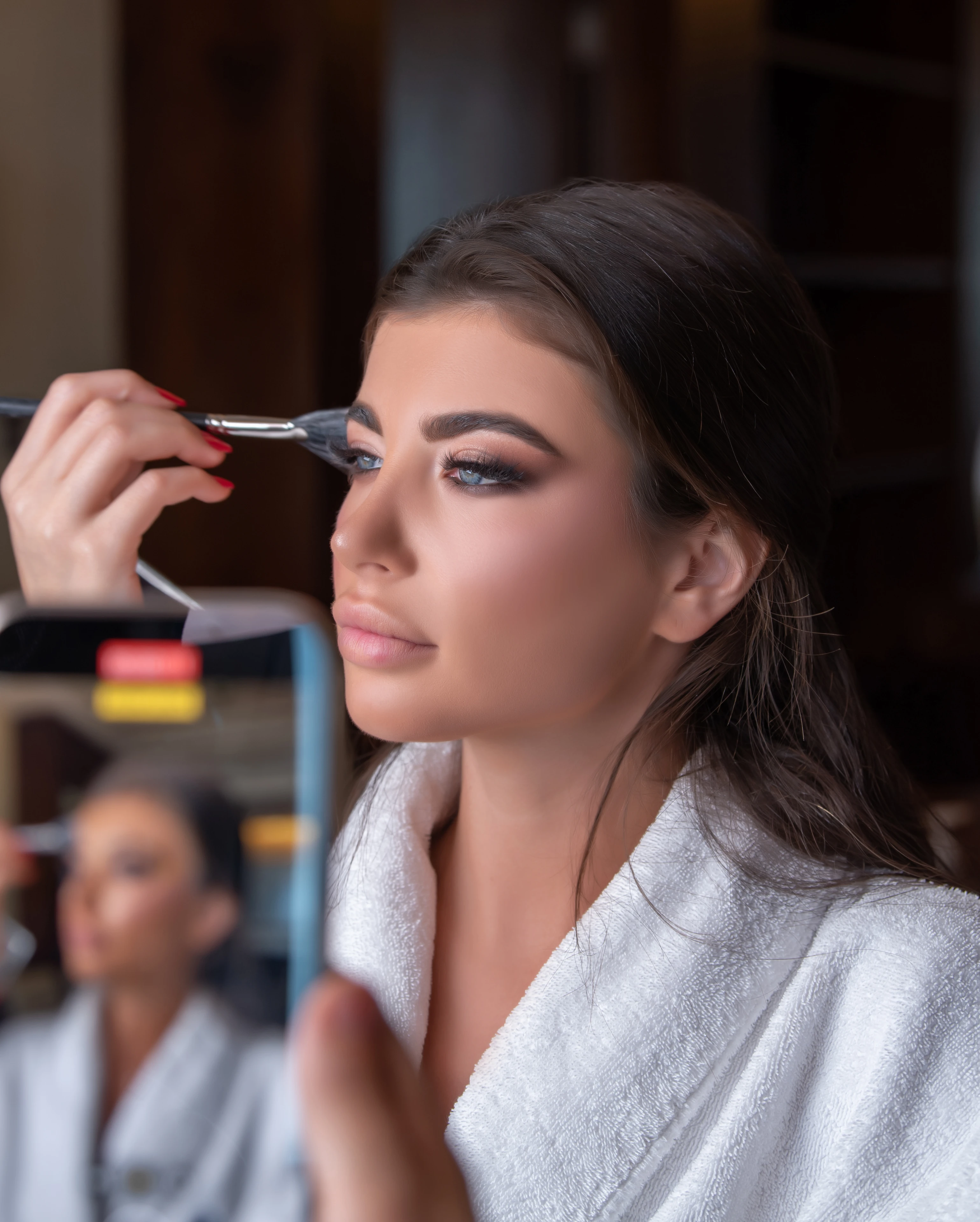
The minutes before the entrance are often the most emotional of the night: the bride waiting behind the door, her mother adjusting the veil, a sister holding the train. They happen out of sight of the guests, which makes them some of the most private photographs of the wedding. An all-female team of photographers can be with you in that room without anyone having to think twice.
What belongs on a zaffa checklist?
- Choose the song and time it against the walk.
- Rehearse the walk on the day if the venue allows it, even once.
- Agree the lighting cue with the venue and your coordinator.
- Decide who walks with you, and who waits at the kosha.
- Tell your photographer and videographer when the entrance is planned, and keep the aisle clear.
If you are planning an Emirati or Arab wedding in Dubai or Abu Dhabi, our wedding photography page explains how we cover the whole night, the zaffa included.