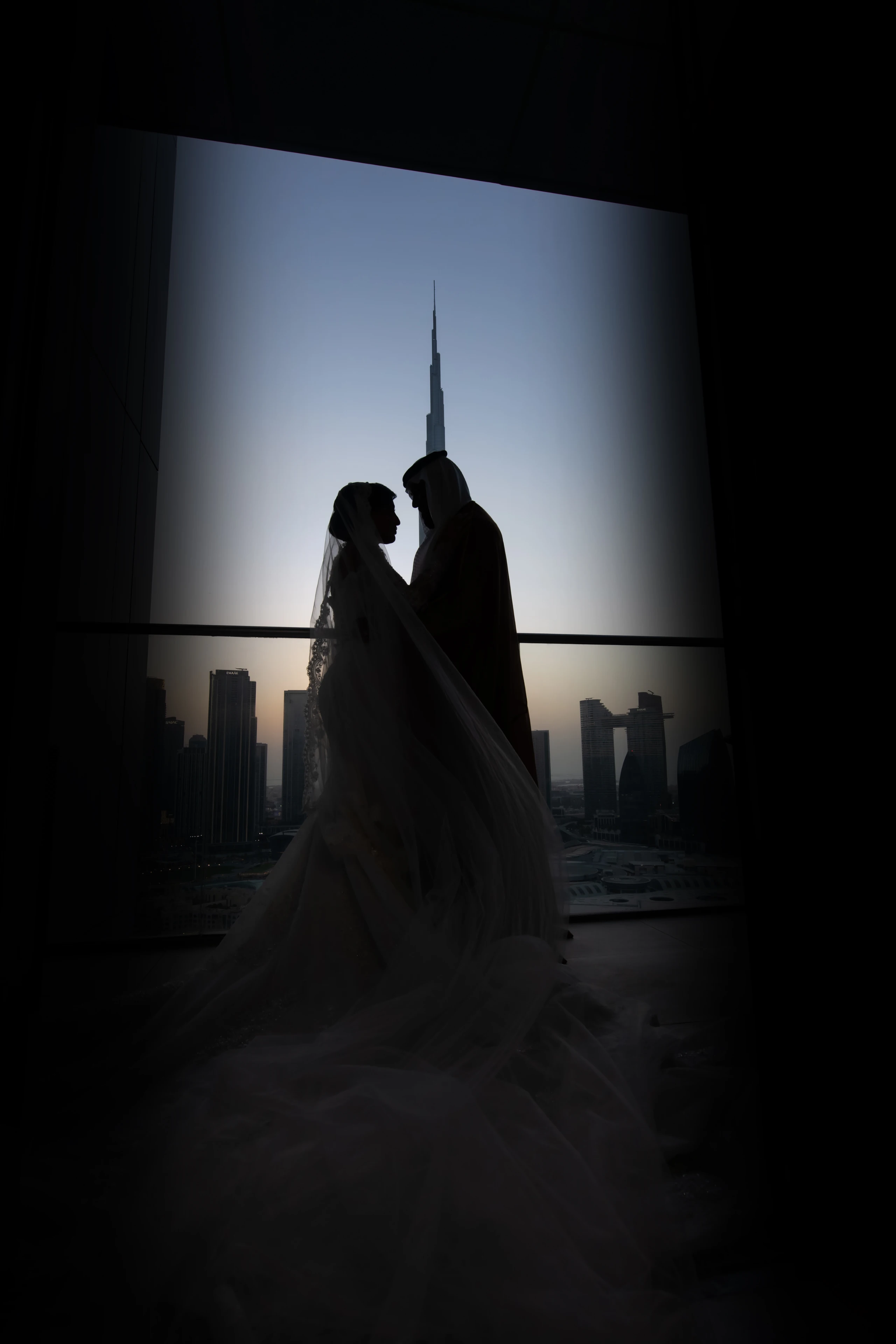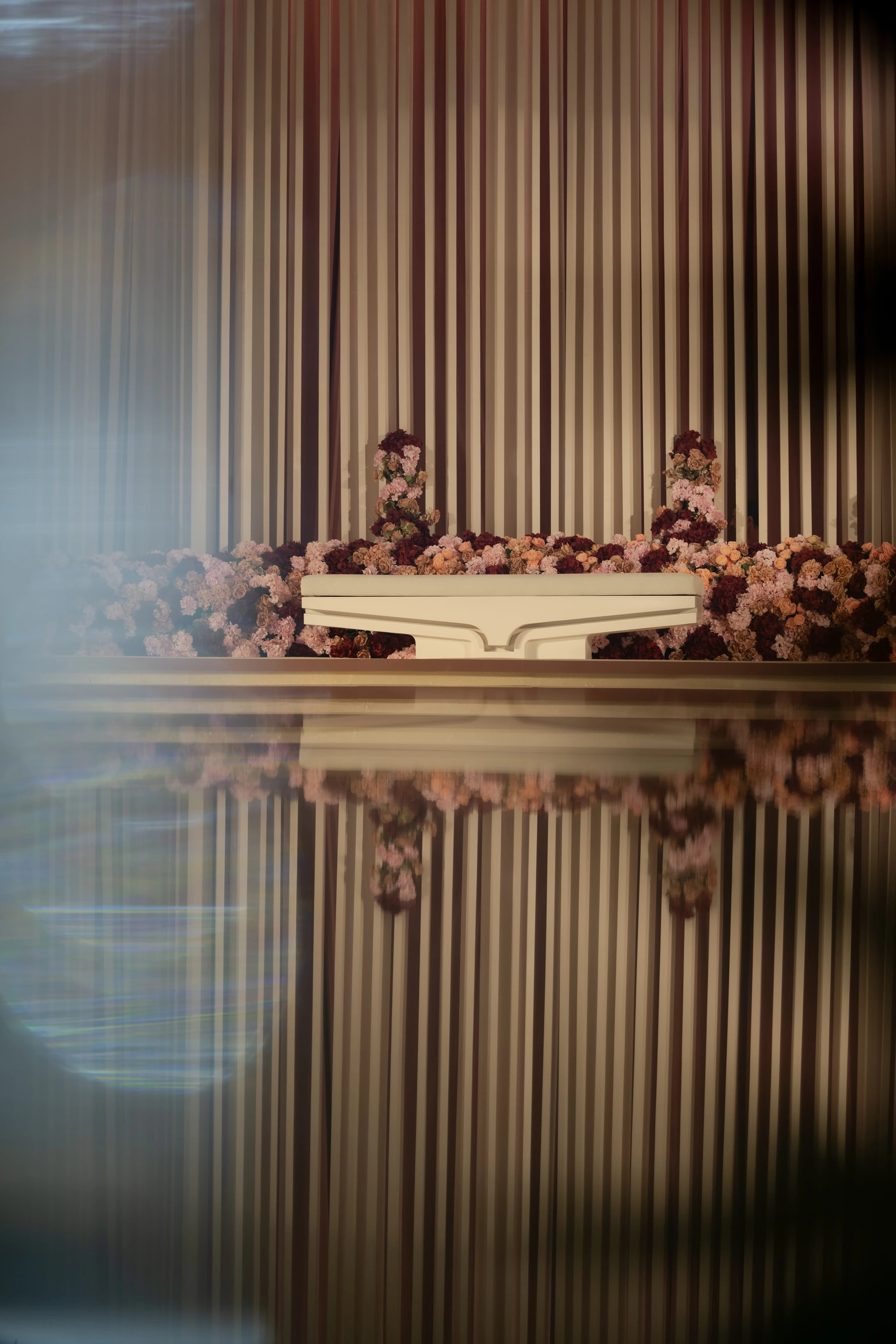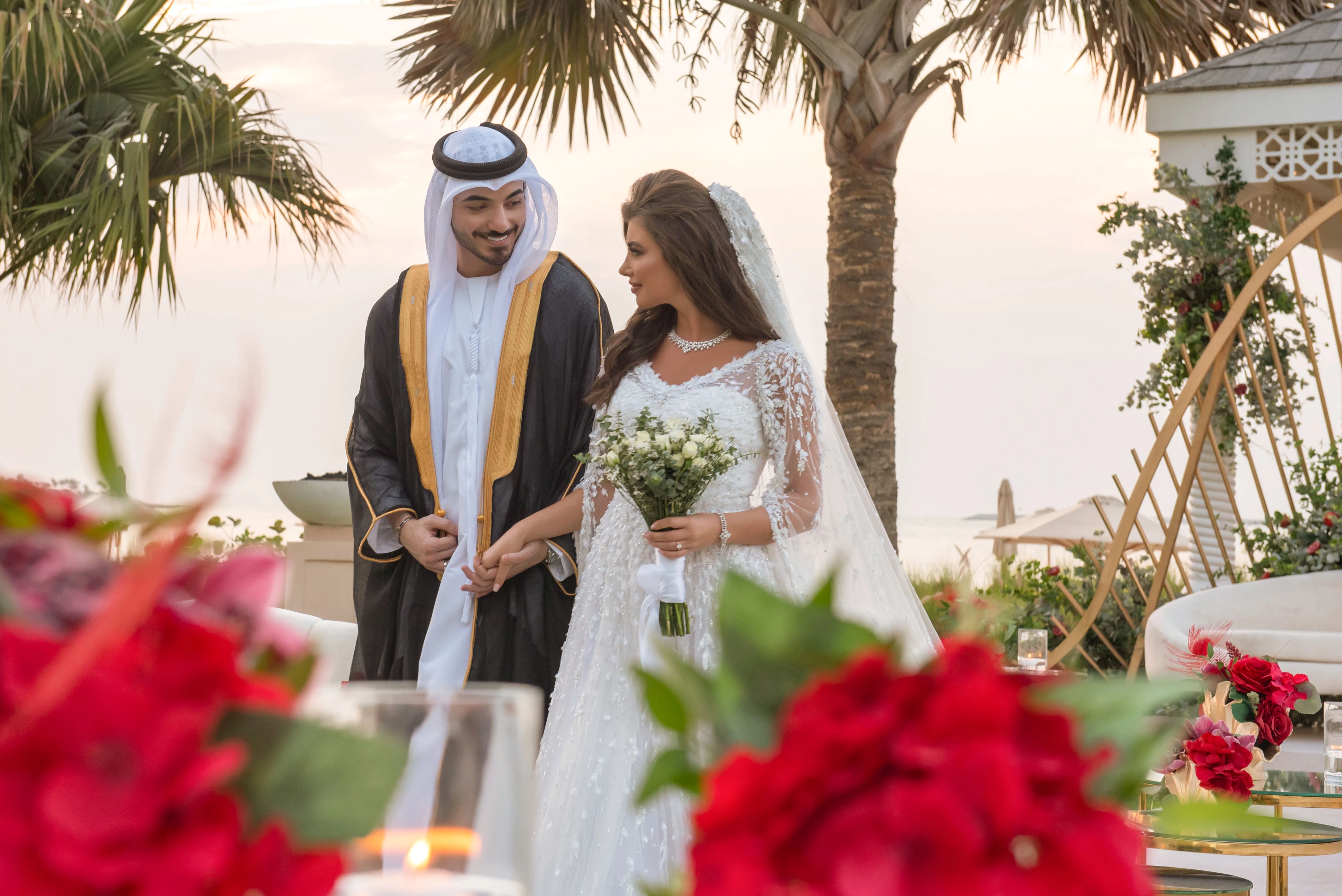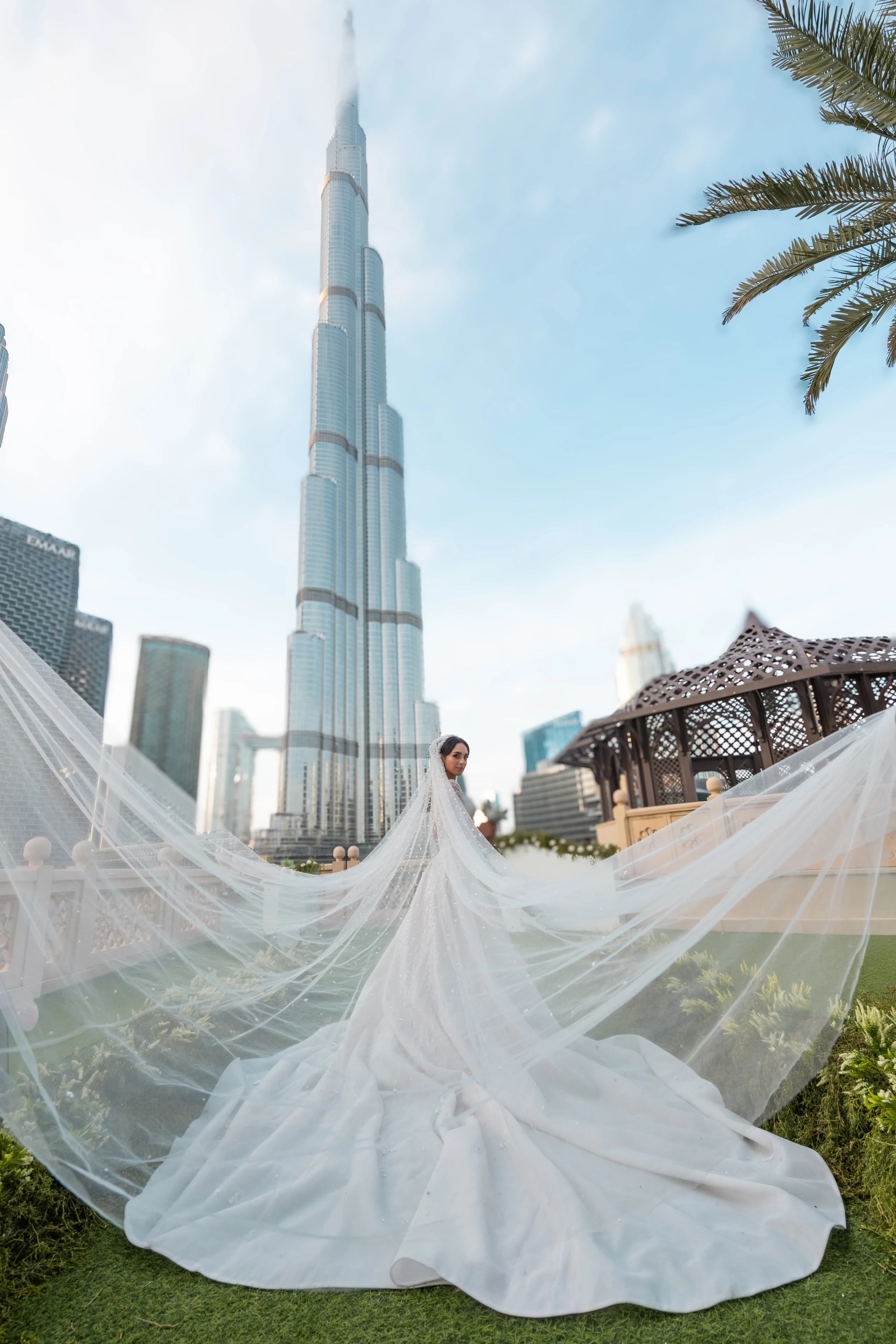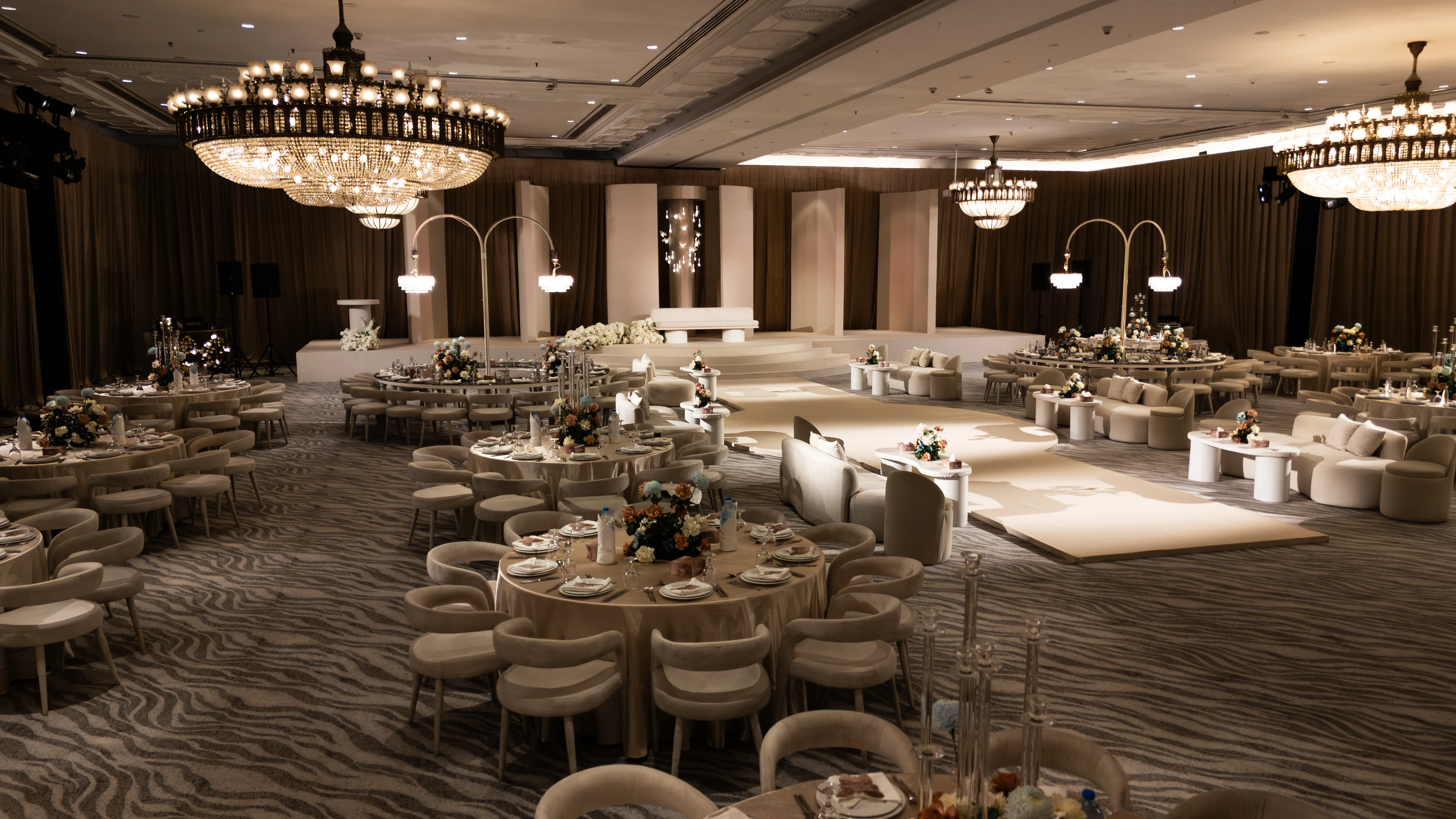
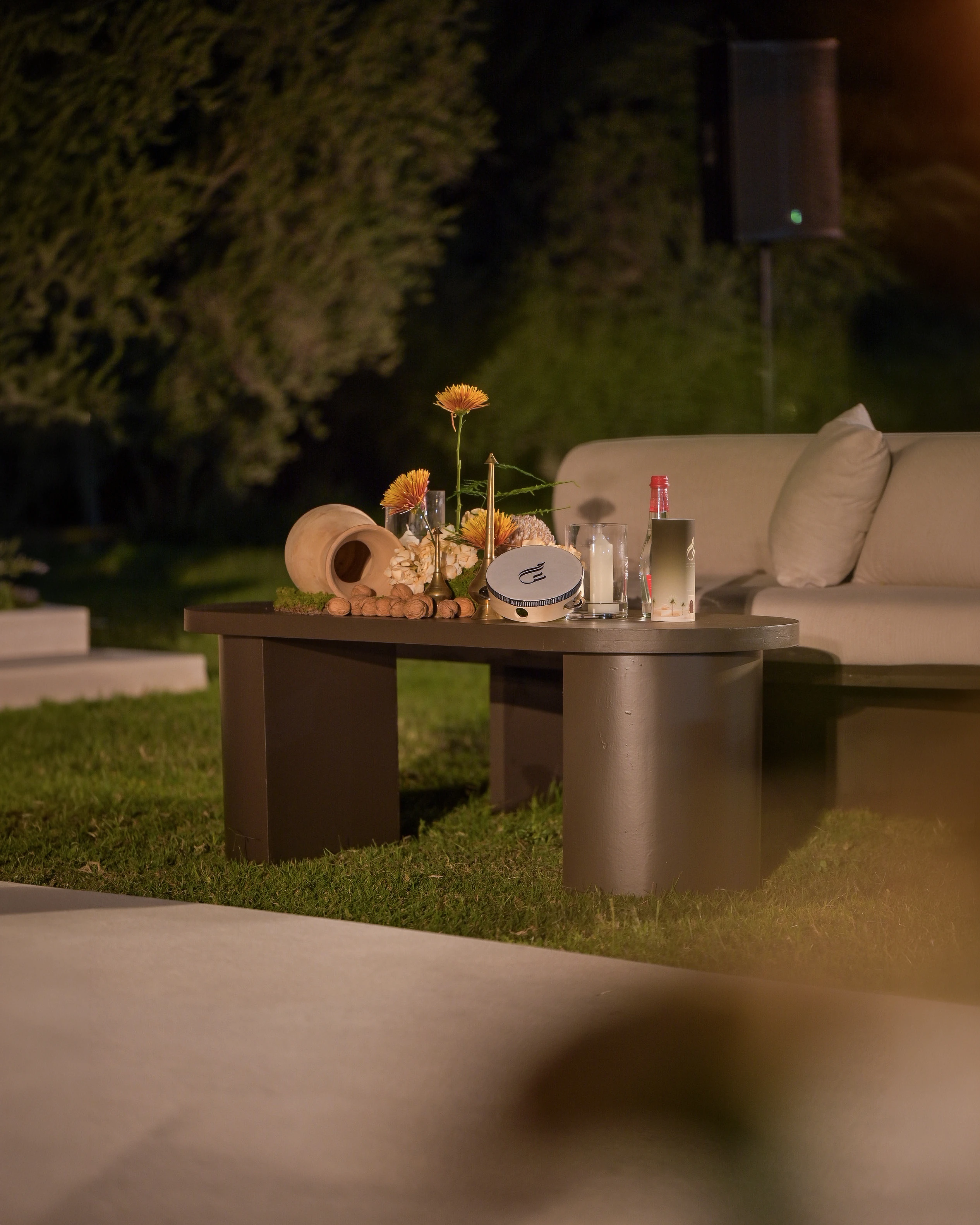
A note before we start: the venues named below are well-known public examples of each type, included to help you picture the options. They are not recommendations, and their inclusion does not mean we have photographed there, with one exception: we photograph weddings by Emaar, including at the Burj Khalifa. The photographs on this page are from weddings and henna nights we have photographed, chosen to show different kinds of space.
| Venue type | Light | What it means for the photographs |
|---|---|---|
| Hotel ballroom | Controlled evening lighting, often chandeliers | Wide photographs of a designed room; needs a photographer at ease in low light |
| Wedding hall | Venue lighting built for large celebrations | Space for the room and the bride's entrance; ask for a quiet room with daylight |
| Beach or resort hotel | Daylight, softest in the hour before sunset | Portraits with sea and sky; plan around the midday sun and summer heat |
| Desert resort | Open sky; dusk falls quickly | Striking portraits at last light; allow for the drive |
| Home or private garden | Whatever the room or garden offers | Intimate family moments; choose a room with good light |
Why choose a hotel ballroom?
For Emirati and Arab weddings in Dubai, the hotel ballroom is a common choice for the women's celebration. Atlantis The Palm on Palm Jumeirah, with its large ballroom, and the hotels of Madinat Jumeirah are among the best-known names for big weddings, and many other hotels across the city offer smaller ballrooms.
For photography, ballrooms have clear advantages. They are fully controlled spaces: the lighting, the kosha, the runway and the tables are all designed for the night. High ceilings give room for chandeliers, ceiling installations and wide photographs of the whole room. The challenge is light. Ballrooms have no daylight, and evening events rely on stage lighting and ambient light, so ask your lighting designer for soft, neutral light on the kosha and along the runway.
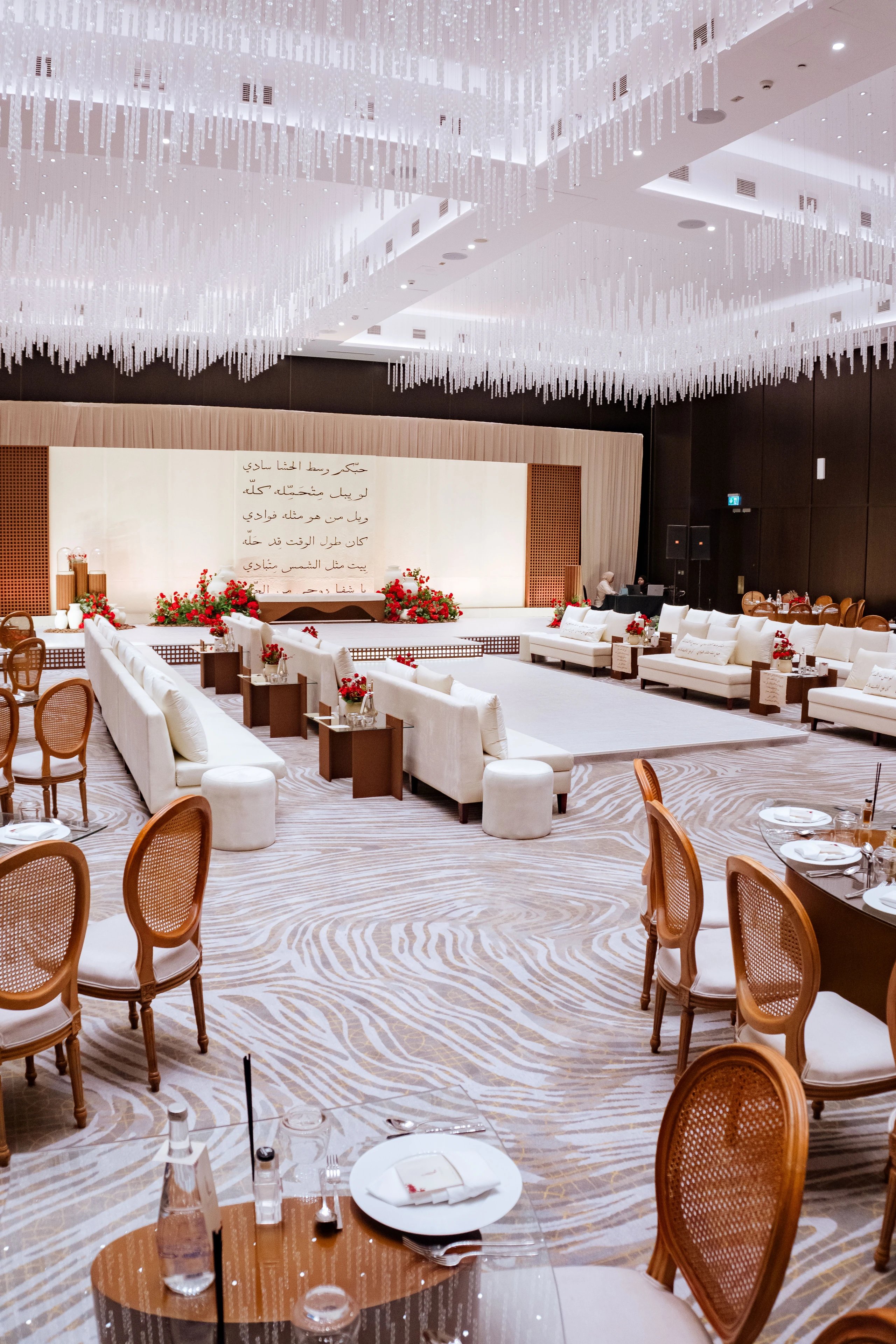
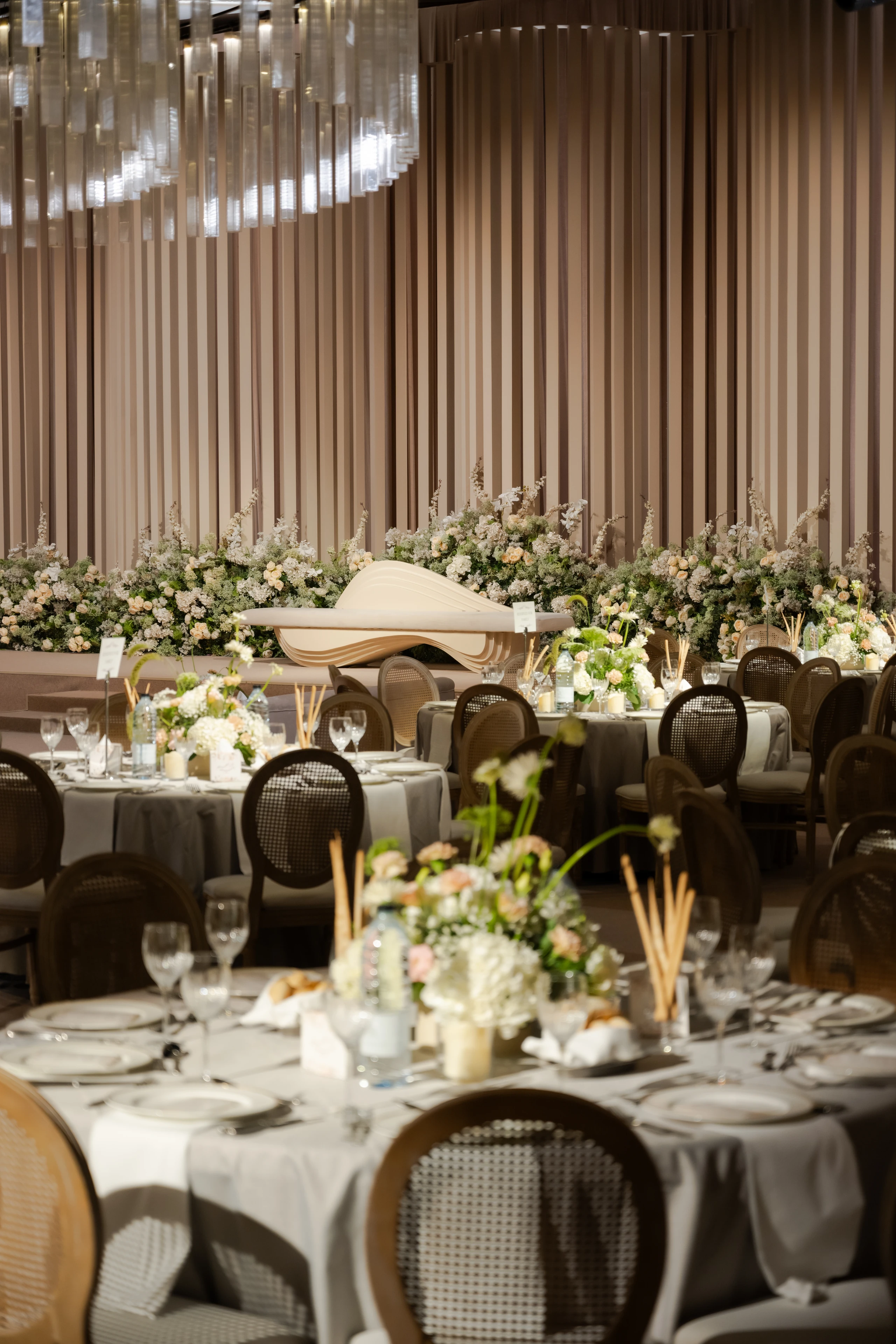
What is a wedding hall?
Dedicated wedding halls are another popular choice, especially for larger Emirati celebrations and for ladies-only events. Unlike hotel ballrooms, they are designed only for weddings and similar celebrations, and many have separate entrances and spaces so men's and women's gatherings can be held under one roof or nearby.
Halls are usually generous in size, which helps with wide photographs of the room and the bride's entrance. Ask the hall which lighting they provide, whether your kosha designer can bring their own, and whether there is a quiet room with good light for the bride to get ready in and for portraits before the zaffa.
What do beach and resort hotels offer?
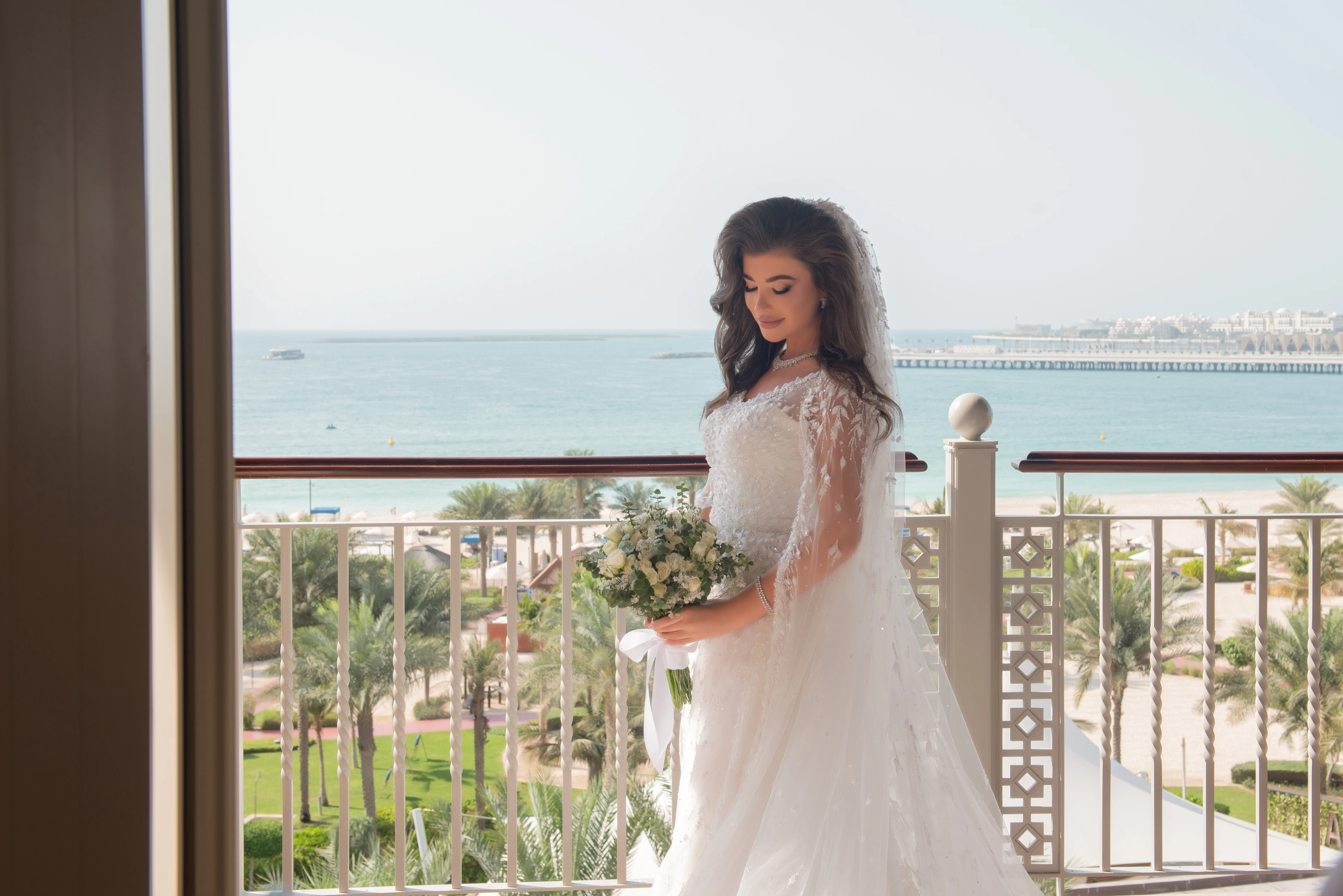
Dubai's beachfront hotels, from Jumeirah to Palm Jumeirah and Al Sufouh, offer lawns, terraces and beaches with the sea and the city behind. Burj Al Arab in Jumeirah and One&Only Royal Mirage in Al Sufouh are two of the best-known examples. These venues suit smaller ceremonies, mixed weddings, receptions and henna nights held outdoors.
For the photographs, outdoor venues offer something no ballroom can: real daylight and sunset. The hour before sunset gives the softest light of the day for portraits of the couple. Timing matters, though: in the summer months heat and humidity make long outdoor sessions difficult, and outdoor events often move to the cooler months. If you are planning a pre-wedding photoshoot, a beach hotel can be a good setting for that too.
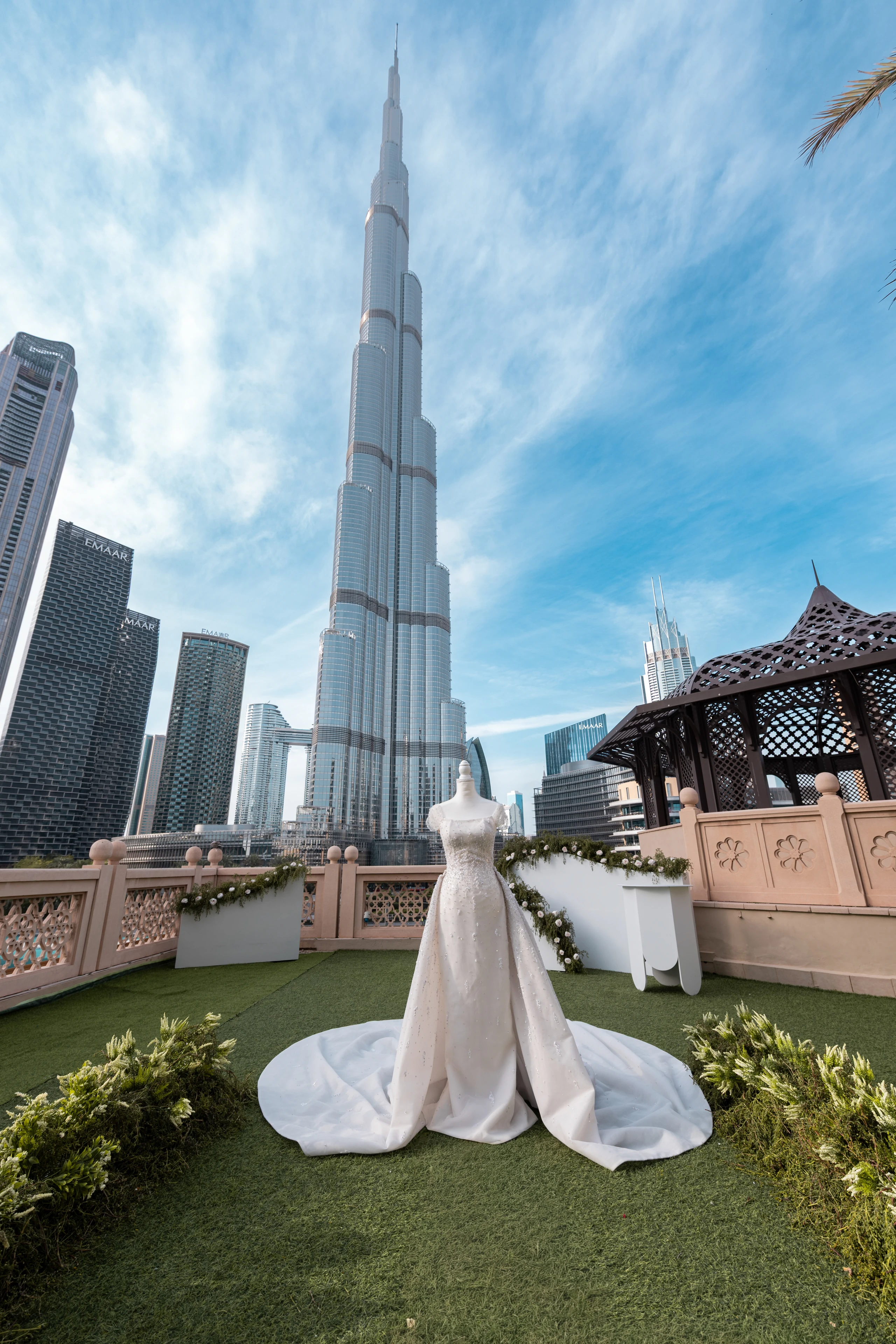
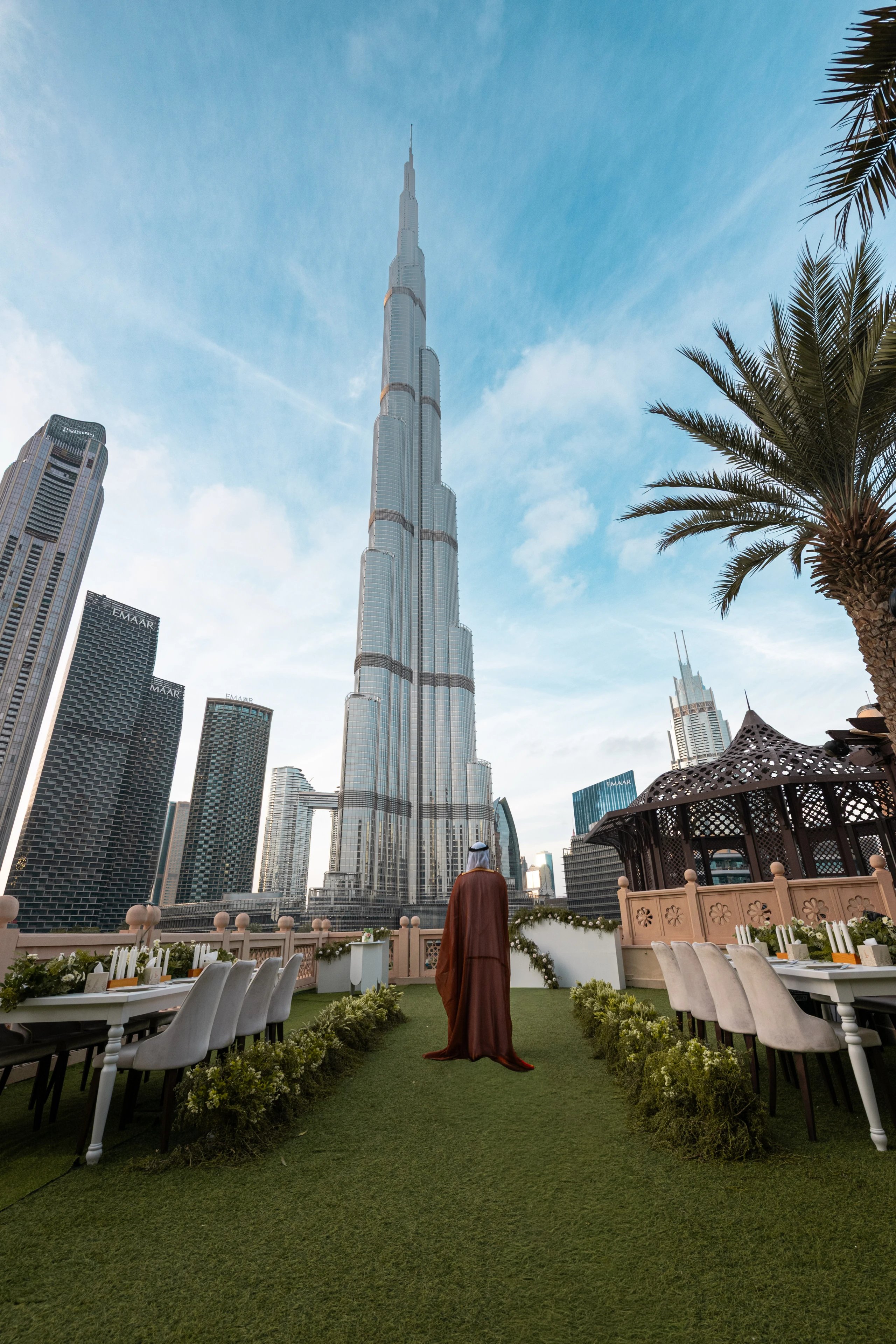
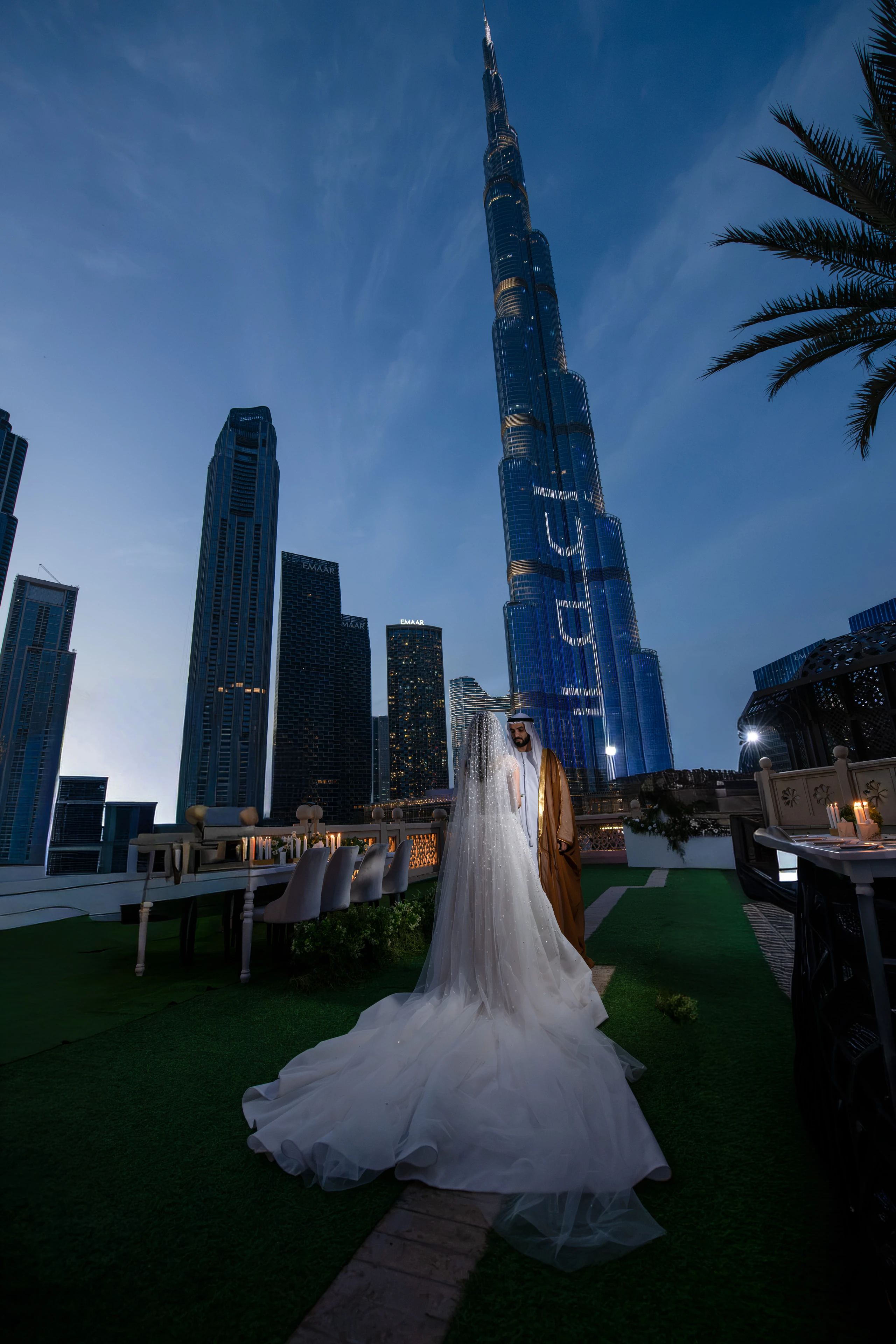
What is a wedding at the Burj Khalifa like to photograph?
We photograph weddings by Emaar, including at the Burj Khalifa in Downtown Dubai. In the wedding shown here, the tables were set on a terrace lawn beneath the tower, the couple met there in the late afternoon, and the cake was cut after dark with the tower lit above them.
In daylight the tower belongs in the wide photographs; after sunset it lights up and the portraits move to the dusk. More on our Burj Khalifa wedding page.
What about a desert resort?
For a very different setting, desert resorts outside the city offer dunes, open sky and a sense of distance from it all. Bab Al Shams, on Al Qudra Road in the desert south of the city, is one well-known example. Desert weddings and henna nights can be striking, with lanterns, majlis seating and sadu weaving looking completely at home.
The photography considerations are distance and light. Allow for the drive, for you, your guests and your photographer, and plan the main portraits for the last light of the day, as dusk in the desert falls quickly. After dark, lanterns and candles look beautiful but give very little light, so think about some soft lighting near where the bride and family will sit.
Can the wedding be at home or in a private garden?
Many Emirati families still hold the henna night, and sometimes the Milcha, at home. A family majlis or garden can be the most personal venue of all. For the photographs, the main things are light and space: a room with a window for portraits during the day, and enough light in the evening for the henna and the family gathering.
What should you ask any venue about photography?
- Is there a quiet room with natural light where the bride can get ready and have portraits taken?
- Can the photographer and videographer access the hall before guests arrive, to photograph the setting?
- What lighting does the venue provide, and can your kosha or lighting designer adjust it?
- Are there restrictions on where photographers can stand, or on equipment?
- If the men's and women's celebrations are in different places, how far apart are they?
- For outdoor venues, what time is sunset on your date, and is there a covered alternative?
Whichever venue you choose, we photograph weddings across Dubai and Abu Dhabi. Our wedding photography page explains how we cover the day, and our questions to ask a wedding photographer can help you compare photographers.